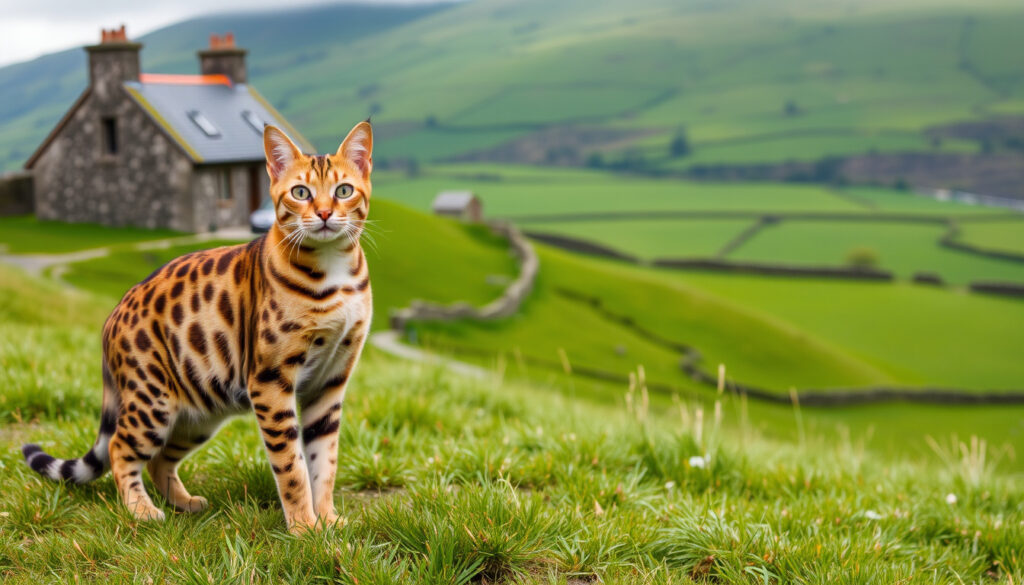
Bengal Cat Ireland: Price, Lifespan & Owner Facts
We all know someone who’s fallen for the Bengal’s wild looks and energetic charm — but bringing one home is a different story. This guide lays out the facts you need before you start browsing ads.
Average price in Ireland (EUR): €600 to €3,000 ·
Average lifespan (years): 12–16 ·
Typical weight (kg): 4–8 ·
Coat patterns: spotted, marbled, rosetted ·
Recognised colours: brown, snow, silver, charcoal, blue, melanistic (black)
Quick snapshot
- Bengals are hybrid crosses of Asian leopard cat and domestic cat (Wikipedia)
- Average price in Ireland: €600–€3,000 (Bengal Cats Ireland Facebook group)
- Lifespan 12–16 years (PetMD)
- May be territorial with other cats (zooplus.ie)
- Exact prevalence of Bengal-specific health issues in Ireland — no national registry
- Whether Bengals are universally suitable for families with very young children — mixed owner reports
- Effectiveness of specific indoor enrichment strategies for Bengals — limited peer-reviewed data
- 1960s: First deliberate crosses of Asian leopard cat with domestic cats in the US (Wikipedia)
- 1980s: Formal breed development by Jean Mill; TICA recognition in 1986 (Wikipedia)
- 2000s: Bengal cats gain popularity in Europe, including Ireland (Wikipedia)
- 2020s: Sustained demand on DoneDeal and Facebook Marketplace in Ireland (Bengal Cats Ireland Facebook group)
- Irish buyers should confirm homeowners’ insurance policy covers Bengals
- Prepare an indoor environment with climbing structures and interactive toys
- Budget for annual costs of €900–€2,000 including food, vet care, and enrichment
Six essential facts in one place — from scientific classification to legal status in Ireland.
| Attribute | Details |
|---|---|
| Scientific name | Felis catus × Prionailurus bengalensis |
| Origin | United States (1960s–1980s) |
| Coat type | Short, dense, luxurious |
| Recognition | TICA, CFA (championship status) |
| Legal restrictions in Ireland | None, but some homeowners’ insurance may exclude Bengals |
| Minimum enclosure size (indoor) | Large multi-level cat tree and window perches |
The implication: while Bengal cats are not banned in Ireland, insurance caveats and space needs separate them from the average lap cat.
Are Bengal cats good house pets?
What makes Bengal cats special as pets?
- Bengals are extraordinarily active and intelligent — they need daily play sessions and puzzle feeders to thrive
- They form strong bonds with owners but can be independent and sometimes aloof
- The hybrid ancestry gives them a distinctive spotted or marbled coat that attracts admirers
Why this matters: a Bengal is not a low-energy companion. Without enrichment, the same intelligence that makes them entertaining can lead to destructiveness — scratched furniture, opened cabinets, and constant demands for attention.
How do Bengal cats behave with children and other animals?
- They can be affectionate and playful with respectful children, but their high energy may overwhelm toddlers
- Territorial aggression toward other cats is a recognised challenge — especially if the other cat is also dominant (as per zooplus.ie)
- Early socialisation helps, but some Bengals prefer being the only pet
An Irish family with existing territorial cats may find a Bengal triggers conflict. The higher the prey drive, the more careful introductions need to be.
The implication: an owner must be prepared for high energy and potential territorial issues.
How much does a Bengal cat cost in Ireland?
Bengal cat price range in Ireland
- Advertised prices on DoneDeal and Facebook Marketplace range from €500 to €3,000, with most reputable breeders quoting €600–€3,000
- In the UK, pet-quality Bengal kittens typically cost £500–£2,000+, and US prices run $1,500–$3,000
- Breedspedia reports a common range of €800–€2,500 from reputable breeders
What factors affect Bengal cat price?
- Coat colour and pattern — rare colours like charcoal or snow command higher prices
- Breeder reputation and health screening — prices reflect genetic testing for HCM and PRV
- Pedigree and show-quality lines cost more than pet-quality kittens
- Total annual cost of ownership can run $1,500–$2,500 per year (food, litter, vet care, enrichment)
A lifetime Bengal can cost €25,000–€40,000 over 14 years (Petful). The low upfront price on a marketplace ad may hide expensive veterinary bills later.
The catch: initial purchase is only a fraction of total lifetime cost.
Is a Bengal cat an indoor cat?
Can Bengals live happily indoors?
- Yes — with sufficient enrichment, Bengals can thrive as indoor cats
- Indoor living protects them from traffic, theft, and other outdoor dangers
- Their strong prey drive means they can pressure local wildlife if allowed outdoors — another reason to keep them inside
How much space does a Bengal cat need?
- Bengals need more space than average house cats — large climbing structures, window perches, and room to run
- Apartment living is possible if you dedicate at least 30 minutes of play daily and provide vertical space
- Bored Bengals become destructive — expect scratched furniture and opened cabinets if understimulated
The pattern: indoor Bengals are happy Bengals, but they demand more square metres of climbing area and more daily interaction than a typical tabby.
What are the downsides of Bengal cats?
Are Bengal cats aggressive?
- They can be territorial — especially toward other cats of the same sex (as per zooplus.ie)
- Some Bengals display dominant behaviour and may bite if overstimulated during play
- Aggression is not universal but requires firm, consistent handling from an experienced owner
What health issues are common in Bengals?
- Like all purebreds, Bengals may be prone to genetic conditions such as progressive retinal atrophy and hypertrophic cardiomyopathy — though prevalence in Ireland is unrecorded
- Patellar luxation (loose kneecaps) is also reported in the breed
- Regular veterinary check-ups and genetic screening by breeders are recommended
The Bengal’s exotic appearance and lively personality come with a real behavioural and health risk profile. An unprepared owner may face costly vet visits and a cat that doesn’t settle into quiet indoor life.
The takeaway: owning a Bengal means accepting a higher level of risk and responsibility compared to typical domestic breeds.
What is the lifespan of a Bengal cat?
How long do Bengal cats live on average?
- The typical Bengal lifespan is 12–16 years
- WHISKAS UK gives a slightly narrower range of 12–15 years
- With optimal care and nutrition, some Bengals reach 18 years
What affects Bengal cat longevity?
- Indoor-only lifestyle — reduces accidents, fights, and infectious disease exposure
- Quality veterinary care, including annual check-ups and dental health
- Diet — high-protein, grain-free food supports their active metabolism
- Genetic screening by breeders can reduce inherited disease risk
Why this matters: the decision to keep a Bengal indoors is not just about safety — it directly adds years to their life. For an owner committing to a 12–16 year relationship, that indoor cost is an investment.
Eight key specifications of the Bengal cat — from size to coat patterns to breed recognition.
| Characteristic | Specification |
|---|---|
| Size | Medium to large; males 4–8 kg, females 3–6 kg |
| Body type | Muscular, athletic, long-bodied |
| Coat length | Short, dense, soft-silky texture |
| Coat pattern | Spotted (random or aligned), marbled, rosetted |
| Accepted colours | Brown, snow (seal lynx, seal sepia, seal mink), silver, charcoal, blue, melanistic |
| Eye colour | Gold, green, or hazel (blue in snow colour-point) |
| Breed registries | TICA (championship 1986), CFA (championship 2018), FIFe |
| Hybrid generation | Domestic Bengal = F4 or later (F1–F3 are considered wild hybrids) |
Upsides
- Striking wild appearance
- Highly intelligent and trainable (can learn tricks and walk on a leash)
- Affectionate and interactive with owners
- Short coat — minimal grooming needed
- Generally healthy breed with good lifespan
Downsides
- High energy — requires daily dedicated play and enrichment
- Can be destructive when bored
- Territorial aggression toward other cats
- Strong prey drive — not safe with small pets (hamsters, birds)
- Higher cost — purchase price and annual care are above average
- Insurance and rental restrictions possible
What we know for sure and what remains uncertain
Confirmed facts
From the snapshot and multiple sources, Bengals are hybrid cats (Wikipedia), cost €600–€3,000 in Ireland (Bengal Cats Ireland Facebook group), live 12–16 years (PetMD), and may be territorial with other cats (zooplus.ie).
What remains unclear
- Exact prevalence of Bengal-specific health issues in Ireland — no national registry
- Whether Bengal cats are universally suitable for families with very young children — mixed owner reports
- Effectiveness of specific indoor enrichment strategies for Bengals — limited peer-reviewed data
What experts say
“Bengal cats love to be active and play. They can be very demanding of attention and if they don’t get it, they can become destructive.”
— zooplus.ie breed guide
“The average price of a Bengal cat is between €600 and €3,000 — depending on coat colour, pattern, and breeder reputation.”
— Bengal Cats Ireland Facebook group
“The Bengal cat is a hybrid breed that resulted from crossing the Asian leopard cat with domestic cats, mostly the Egyptian Mau.”
— Wikipedia
For the Irish buyer, the choice is not one of legality (domestic Bengals are legal here) but of lifestyle. An owner who can commit daily enrichment, handle potential territorial issues with other pets, and budget €800–€1,500 a year will find a fiercely intelligent, loyal, and stunningly beautiful companion. An owner who wants a low-energy lap cat or who shares a home with small children and other territorial pets may end up frustrated — and the cat may end up rehomed. The implication: know your own energy and space before you fall for those rosettes.
petful.com, pawlicy.com, whiskas.co.uk, breedspedia.com, petcarehelperai.com, petplace.com, youtube.com, carnilove.com, catbreedslist.com, petraveller.com.au
Frequently asked questions
Do Bengal cats get along with dogs?
With proper socialisation, many Bengals coexist well with dog-friendly breeds. Their high prey drive can trigger chasing, so introductions should be gradual and supervised.
How much exercise does a Bengal cat need daily?
At least 30–45 minutes of active play (fetch, wand toys, puzzle feeders) plus access to climbing structures. Without this, behaviour problems emerge.
Are Bengal cats hypoallergenic?
No. Bengals produce the same Fel d 1 protein as other cats. Their short coat may spread less dander, but they are not allergy-free.
What do Bengal cats eat?
A high-protein diet is ideal — premium dry food, wet food, or raw. Like all cats, they need taurine. Consult your vet for a balanced meal plan.
Do Bengal cats shed a lot?
Moderate shedders. Their short coat requires weekly brushing to reduce loose hair and distribute skin oils.
Can Bengal cats be left alone during the day?
They can be left alone for standard working hours if given enrichment (cat trees, toys, window views). A companion cat or a cat sitter helps prevent loneliness.
What is the difference between a Bengal cat and a tabby?
A tabby is a coat pattern found in many domestic breeds. A Bengal is a specific breed with wild ancestry — its spots or marbling come from the Asian leopard cat, not from the tabby gene.
If you are considering a Bengal cat in Ireland, you might also find our guides helpful: Blood Types: Rarest, Most Common, and Irish Distribution and Women’s Cardigan: Types, Buying Guide & Irish Brands.
More related posts
 Alex Albon: Appendicitis Coma, Red Bull Exit, Engagement
 Bayern Munich vs Auckland City FC Stats: Club World Cup 10-0
 Martin Kemp: Illness, Net Worth, Family, and Feuds Explained
 26-30 Railcard: Is It Worth It? Save 1/3 on UK Trains
 Buffalo Bills vs Baltimore Ravens Match Player Stats 2025 Week 1
 Carol Burnett: Her Life, Career, and Retirement at 91
 Mr. Bean: Age, Health, and the Real Story of Rowan Atkinson
 UK Size to EU Shoes: Conversion Guide for Men, Women & Kids