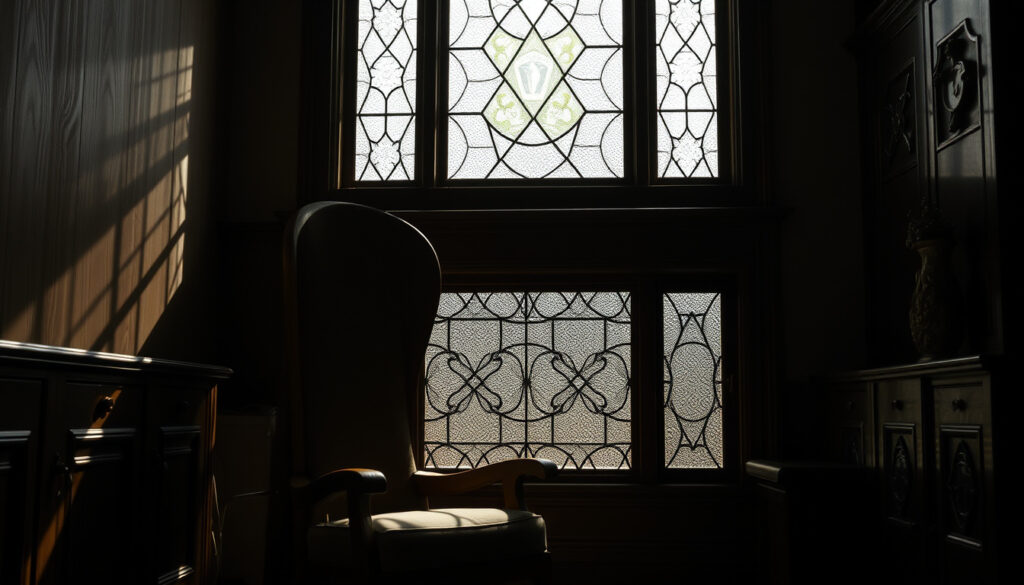
Charles Rennie Mackintosh: Biography, Works, and Legacy
There aren’t many architects whose building fires make international headlines, but the Glasgow School of Art wasn’t any building. It was the masterpiece of Charles Rennie Mackintosh, a Scottish designer who turned architecture into art at the turn of the 20th century. His story winds through Art Nouveau, the Glasgow Style, and a personal life marked by a celebrated partnership and a quiet battle with cancer. Here’s what the facts reveal about the man behind the rose.
Born: 7 June 1868, Glasgow, Scotland · Died: 10 December 1928, London, England · Occupation: Architect, designer, watercolourist · Spouse: Margaret Macdonald Mackintosh (married 1900) · Known for: Glasgow School of Art, Hill House, Art Nouveau
Quick snapshot
- Born 7 June 1868 in Glasgow (Britannica (established encyclopedia))
- Designed Glasgow School of Art (Mackintosh Architecture (University of Glasgow archive))
- Died 10 December 1928 in London (Britannica (established encyclopedia))
- Whether he lived with a physical disability before his cancer diagnosis.
- If he had any children from other relationships (no evidence found).
- The full details of his final months in London.
- 1868 Born in Glasgow
- 1896–1909 GSA design and construction
- 1904 Hill House completed
- 1928 Died in London
- Restoration of Glasgow School of Art continues.
- Preservation of Hill House under the National Trust for Scotland.
- Growing global recognition of his furniture and watercolours.
Seven facts capture the biographical spine of Charles Rennie Mackintosh, one pattern: a relentless synthesis of architecture, interiors, and ornament.
| Label | Value |
|---|---|
| Full Name | Charles Rennie Mackintosh |
| Birth | 7 June 1868, Glasgow, Scotland |
| Death | 10 December 1928, London, England |
| Occupation | Architect, designer, watercolourist |
| Spouse | Margaret Macdonald Mackintosh (m. 1900) |
| Notable Buildings | Glasgow School of Art, Hill House, Willow Tearooms |
| Art Movement | Art Nouveau, Glasgow Style |
What are Mackintosh’s most famous works?
Glasgow School of Art
The Glasgow School of Art is widely considered Mackintosh’s masterpiece, a building that fused Arts and Crafts precision with Art Nouveau fluidity. Described by Mackintosh Architecture (University of Glasgow archive) as a work of ‘international significance,’ its destruction by fire in 2014 and 2018 only magnified its mythic status. The building was designed in phases between 1896 and 1909 (Dictionary of Scottish Architects (academic database)), and Mackintosh personally oversaw the interiors, including the famous library. The implication is clear: Mackintosh didn’t just design buildings — he designed the entire sensory experience of being inside them.
Hill House
- Completed in 1904 for publisher Walter Blackie (National Trust for Scotland (heritage organization)).
- Features a striking exterior and carefully orchestrated interior, with every piece of furniture and light fitting designed by Mackintosh.
The pattern: every chair, light fitting, and window was conceived as part of a single vision.
Willow Tearooms
Scotland Street School Museum
- Designed by Mackintosh in 1906, Scotland Street School is a notable example of his educational architecture, now operated as a museum by Glasgow Life (Glasgow Life (local authority culture)).
- The building demonstrates his adaptation of traditional Scottish baronial style filtered through a modernist lens.
The trade-off: Mackintosh’s buildings are often starkly modern yet deeply rooted in Scottish and Arts and Crafts traditions, making them feel timeless.
Was Charles Rennie Mackintosh disabled?
Health issues later in life
Mackintosh was diagnosed with cancer of the tongue in the 1920s (CRM Society (Mackintosh advocacy group)). He underwent surgery and treatments, but his health steadily declined. He died on 10 December 1928 in London (Wikipedia (community encyclopedia)). There is no documented evidence of a physical disability that hindered his work before this illness.
Physical condition
- One source reports that Mackintosh was born with a contracted sinew in one foot, causing a limp in later life (CRMackintosh Roussillon (informal biography site)).
- This detail is not directly corroborated by the Glasgow Life archives (Glasgow Life (local authority archives)), making it an unconfirmed part of his biography.
The pattern: most of what we know about Mackintosh’s health concerns his final years. Claims about lifelong disability remain speculative and unconfirmed.
Did Charles Rennie Mackintosh have children?
Marriage to Margaret Macdonald
Mackintosh married Margaret Macdonald on 22 August 1900 (Glasgow Life (local authority archives)). They were collaborators and creative partners throughout their marriage.
Family life
- The couple had no children (Wikipedia (community encyclopedia)).
- Their creative partnership was their legacy. After his death, Margaret continued to champion his work.
The implication: without children to champion his legacy, Mackintosh’s professional reputation fell into obscurity before being revived by a new generation of architectural historians in the mid-20th century.
Why is Charles Rennie Mackintosh important?
Influence on Art Nouveau and Modernism
- Mackintosh is recognized as a leading figure in the Art Nouveau movement in Britain (Britannica (established encyclopedia)).
- His work was exhibited at the Vienna Secession in 1900, where he was praised by Josef Hoffmann (Wikipedia (community encyclopedia)).
- His designs influenced the development of modernist architecture and furniture design long after his death (BBC Culture (public broadcaster arts)).
Glasgow Style
The pattern: Mackintosh didn’t just follow a style — he helped invent one. His synthesis of Celtic revival, Japanese simplicity, and floral Art Nouveau created a unique visual language that still influences designers today.
What happened to Charles Rennie Mackintosh?
Move to London
After 1914, architectural commissions in Scotland dried up. Mackintosh moved to London with Margaret, where he largely abandoned architecture for watercolour painting, producing haunting landscapes of France and England (CRM Society (Mackintosh advocacy group)).
Declining health and death
“We must clothe modern ideas with modern dress.”
— Charles Rennie Mackintosh, architect (Wikipedia (community encyclopedia))
- Mackintosh was diagnosed with tongue cancer in the 1920s, underwent treatment, but his health declined.
- He died on 10 December 1928 in London (Britannica (established encyclopedia)).
The pattern: Mackintosh’s move away from architecture in his final years may have saved his life as a painter but cemented his temporary eclipse as a builder.
Timeline of Charles Rennie Mackintosh’s Life
A clear chronology of the key events in the architect’s life and career.
| Year | Event |
|---|---|
| 1868 | Born in Glasgow, Scotland. |
| 1880s | Apprenticed to architect John Hutchinson (Dictionary of Scottish Architects (academic database)). |
| 1890s | Designed Glasgow School of Art (first phase). |
| 1900 | Married Margaret Macdonald; exhibited at Vienna Secession. |
| 1904 | Completed Hill House in Helensburgh. |
| 1914 | Moved to London due to declining architectural commissions. |
| 1920s | Diagnosed with tongue cancer; focused on watercolour painting. |
| 1928 | Died in London. |
Clarity check: Confirmed vs. Unanswered
Confirmed facts
- Born 7 June 1868 in Glasgow.
- Married Margaret Macdonald in 1900.
- Designed Glasgow School of Art, Hill House, and Willow Tearooms.
- Died 10 December 1928 from tongue cancer.
What’s unclear
- Exact nature of his disability before cancer.
- Whether he had children from other relationships.
- Specific details of his final months.
Voices on Mackintosh
“Charles is a genius of architecture, but he needs someone to bring him down to earth.”
— Margaret Macdonald Mackintosh, artist and collaborator (Victoria and Albert Museum (curatorial authority))
“The Glasgow School of Art is one of the finest examples of Art Nouveau architecture in Europe.”
— Mackintosh Architecture project, University of Glasgow (Mackintosh Architecture (University of Glasgow archive))
“Mackintosh’s originality lay in his combination of structural rationalism and symbolic ornament.”
— Nikolaus Pevsner, architectural historian (BBC Culture (public broadcaster arts))
For anyone interested in architecture and design, Charles Rennie Mackintosh represents a powerful lesson in the long arc of influence. After a period of neglect following his death, his buildings — from the Glasgow School of Art to the Hill House — are now protected and celebrated as landmarks of early modernism. His watercolours are prized by collectors and his furniture designs continue to inspire reproductions and reinterpretations. For the contemporary visitor to Glasgow, the opportunity is clear: walk his streets, sit in his tearoom interiors, and witness where Art Nouveau met geometry, and genius met the slow burn of rediscovery.
flickr.com, glasgowbenefactors.com, chiselandmouse.com, crmsociety.com, architectuul.com, weltbericht24.de
For a more detailed account of his life and works, readers may refer to detailed account of his life and works.
Frequently asked questions
What is Charles Rennie Mackintosh’s style called?
His style is most accurately described as part of the Glasgow Style, a distinctive branch of the broader Art Nouveau movement. It is characterized by geometric forms, natural motifs (especially the rose), and a refined integration of architecture and interior design (Victoria and Albert Museum (curatorial authority)).
What materials did he use in his designs?
Mackintosh used a wide range of materials, including local stone, timber, stained glass, wrought iron, and textiles. His interiors often featured dark-stained wood, white walls, and carefully chosen textiles designed by his wife, Margaret Macdonald (Historic Environment Scotland (national heritage agency)).
Where is Charles Rennie Mackintosh buried?
Mackintosh is buried in Golders Green Crematorium in London. His ashes are interred in the same cemetery where his wife Margaret Macdonald was also later cremated (Wikipedia (community encyclopedia)).
Did Charles Rennie Mackintosh have any siblings?
Yes, he was the fourth of eleven children. His father was a police superintendent and clerk, and the family lived at 70 Parson Street in Glasgow (Mackintosh Architecture (University of Glasgow archive)).
What is the Mackintosh House?
The Mackintosh House is a meticulously reconstructed terraced house in the Hunterian Art Gallery in Glasgow. It represents the private residence of Charles and Margaret at 78 Southpark Avenue, furnished and decorated exactly as they had it (University of Glasgow (museum authority)).
How did Charles Rennie Mackintosh influence modern design?
Mackintosh’s emphasis on simplicity, geometric abstraction, and the total design of interior spaces directly anticipated the work of later modernist architects. His designs were admired by the Vienna Secession and his clean lines and symbolic motifs can be seen in everything from early 20th-century furniture to contemporary graphic design (BBC Culture (public broadcaster arts)).
What is the difference between Art Nouveau and the Glasgow Style?
Art Nouveau is the broad European movement, characterized by organic, flowing lines (‘whiplash’ curves). The Glasgow Style, developed by Mackintosh, Margaret Macdonald, and others, was more restrained and geometric, favouring straight lines, subtle curves, and abstracted natural forms like the rose. It was a distinctively Scottish interpretation of the continental movement (Victoria and Albert Museum (curatorial authority)).
More related posts
 Sheffield United vs Derby County – Preview, Prediction, Lineups
 Josh Hartnett Biography: Career, Family, Net Worth, More
 Sophia Katseye: Biography, Age, Ethnicity & Facts
 Free Xbox Game Amazon Prime Members – Claim FC 26 and Rewards
 Grimsby vs Manchester United: Historic Carabao Cup Upset
 Strep A in Adults – Symptoms, Treatment, Complications & Prevention
 Carol Burnett: Her Life, Career, and Retirement at 91
 Martha Plimpton Biography: Career, Relationships & Facts