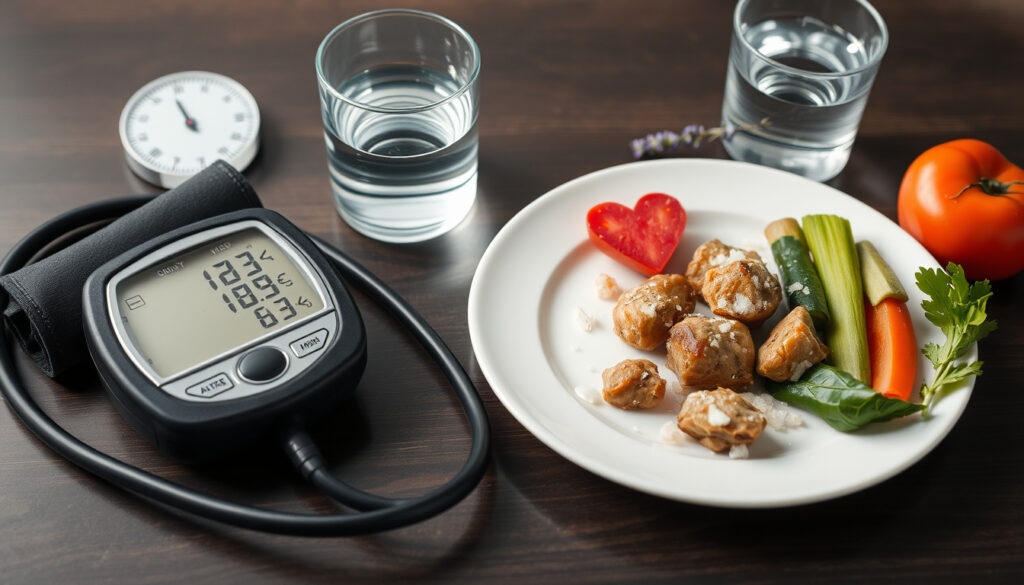
What Causes High Blood Pressure: Symptoms, Foods & Relief
If your doctor has ever told you your numbers are creeping up, you’re not alone — nearly half of all adults don’t even know theirs are high. High blood pressure rarely announces itself, yet it quietly damages arteries, kidneys, and the heart over years. This guide walks you through the real triggers behind hypertension, from hidden dietary culprits to sudden spike emergencies, and gives you actionable steps to take control.
Adults with hypertension globally: 1.28 billion ·
Percentage unaware of condition: 46% ·
Controlled hypertension rate: 21%
Quick snapshot
- High salt intake raises blood pressure (British Heart Foundation (UK heart charity))
- Lifestyle changes can lower BP (Mayo Clinic (U.S. medical center))
- Untreated hypertension increases risk of stroke and heart attack (CDC (U.S. public health agency))
- Exact mechanisms of essential hypertension
- Whether water intake alone significantly lowers chronic BP
- Impact of specific genetic variants on individual response
- Lifestyle changes produce measurable BP drops in 2–4 weeks (Mayo Clinic (U.S. medical center))
- Untreated hypertension damages organs over 5–10 years (CDC (U.S. public health agency))
- Hypertensive crisis requires emergency medical attention within hours (Mayo Clinic (U.S. medical center))
- Identify your BP category and schedule a re-check with your doctor (CDC (U.S. public health agency))
- Reduce dietary sodium below 2,300 mg/day (British Heart Foundation (UK heart charity))
- Incorporate 150 minutes of aerobic exercise weekly to lower BP naturally (Mayo Clinic (U.S. medical center))
Five key facts, one striking pattern: more than 1 in 4 adults globally has hypertension, yet only 1 in 5 has it under control.
| Fact | Value |
|---|---|
| Global prevalence | 1.28 billion adults (World Health Organization (global health authority)) |
| Undiagnosed rate | 46% |
| Primary risk factor for | heart disease, stroke, kidney failure (CDC (U.S. public health agency)) |
| Dietary sodium recommendation | <2,300 mg/day, ideally 1,500 mg (British Heart Foundation (UK heart charity)) |
| DASH diet effect | 8–14 mmHg reduction (Mayo Clinic (U.S. medical center)) |
What are the most common causes of high blood pressure?
Understanding what drives blood pressure up starts with distinguishing two main types of hypertension: primary and secondary. Each has a different origin, and the right treatment depends on which one you’re dealing with.
Primary (essential) vs secondary hypertension
- Primary hypertension has no single known cause but multiple risk factors — age, genetics, and lifestyle all play a role (Mayo Clinic (U.S. medical center)).
- Secondary hypertension can be caused by kidney disease, endocrine disorders, or medications (Mayo Clinic (U.S. medical center)).
Age, family history, and lifestyle risk factors
- Risk factors include age, family history, obesity, high salt intake, alcohol, and physical inactivity (British Heart Foundation (UK heart charity)).
- Nearly 70% of people age 60 and older are impacted by high blood pressure (National Council on Aging (U.S. senior health organization)).
Underlying conditions (kidney disease, diabetes, sleep apnea)
- Kidney disease is a direct cause of high blood pressure (Mayo Clinic (U.S. medical center)).
- Certain endocrine disorders can also trigger hypertension (Mayo Clinic (U.S. medical center)).
The pattern: primary hypertension builds slowly over decades from cumulative lifestyle and genetic risk, while secondary hypertension appears suddenly and often reverses when the underlying condition is treated.
A person with obesity, high salt intake, and a family history of hypertension faces a compounded risk that no single lifestyle change fixes — but reducing any one of those factors measurably lowers the odds.
What can cause a sudden increase in blood pressure?
Sometimes your blood pressure spikes dramatically in minutes or hours — not because of long-term lifestyle, but because of immediate triggers that flood the system.
Acute stressors and emotional triggers
- Anxiety and stress cause a surge in hormones and elevate heart rate, contributing to high blood pressure (University of Utah Health (U.S. academic medical center)).
- Acute pain, panic attacks, and emotional distress can also cause temporary spikes.
Medications and substances (caffeine, NSAIDs, decongestants)
- Certain prescription or over-the-counter medications can cause high blood pressure (Mayo Clinic (U.S. medical center)).
- Decongestants, NSAIDs, and excessive caffeine are common culprits.
Medical emergencies (hypertensive crisis, preeclampsia)
- A hypertensive crisis (systolic >180 or diastolic >120) requires immediate medical attention (Mayo Clinic (U.S. medical center)).
- Pregnancy-related preeclampsia causes sudden BP increase and can be life-threatening.
What this means: if your blood pressure jumps 30 points or more in a single day, look for a drug, stress, or pregnancy trigger — and treat it as an emergency at 180/120.
A sudden spike from NSAIDs or caffeine is reversible once the substance is stopped, but a hypertensive crisis from preeclampsia or kidney failure needs immediate hospital care to prevent organ damage.
What are 10 warning signs of high blood pressure?
Most people with high blood pressure have no symptoms, which is why it’s called the silent killer. But when blood pressure reaches dangerously high levels, the body sends signals you shouldn’t ignore.
Why high blood pressure is often called the silent killer
- Hypertension is often referred to as the silent killer because patients can have high blood pressure for a long time with few to no symptoms (Mass General Brigham (U.S. hospital network)).
- The first sign of hypertension may be a heart attack, stroke, or kidney damage.
Common symptoms when BP is extremely high
- Severe hypertension can cause headaches, dizziness, nosebleeds, chest pain, vision changes, fatigue, irregular heartbeat, blood in urine, confusion, and shortness of breath (Mayo Clinic (U.S. medical center)).
- These 10 warning signs typically only appear when blood pressure is dangerously elevated.
How to recognize a hypertensive emergency
- Symptoms may not appear until BP reaches dangerously high levels — above 180/120 (Mayo Clinic (U.S. medical center)).
- If you experience chest pain, severe headache, confusion, or sudden vision changes, call 911 immediately.
The trade-off: the silent nature of hypertension means you could have it for years without knowing — which is why regular screening is the only reliable way to catch it before the damage is done.
What is the number one food that causes high blood pressure?
If there’s one dietary villain in the hypertension story, it’s sodium — and it’s hiding in foods you’d never suspect.
Sodium and its direct effect on blood pressure
- Excess sodium is the leading dietary contributor to high blood pressure (British Heart Foundation (UK heart charity)).
- The American Heart Association recommends no more than 2,300 mg of sodium per day, ideally 1,500 mg (American Heart Association (U.S. heart health organization)).
The worst foods for blood pressure (processed meats, canned soups, salty snacks)
- Processed meats, canned soups, salty snacks, and fast food are the highest sodium culprits.
- Processed and restaurant foods account for over 70% of dietary sodium (CDC (U.S. public health agency)).
How to reduce sodium without sacrificing flavor
- Swap salt for herbs, spices, lemon juice, and vinegar when cooking.
- Choose fresh or frozen vegetables over canned, and rinse canned beans and vegetables before eating.
The implication: cutting sodium by just 1,000 mg per day can lower systolic BP by 5–6 mmHg — roughly equivalent to the effect of a first-line blood pressure medication.
How can I reduce my blood pressure quickly?
Whether you’re facing a spike or want to lower chronic numbers, here’s what works in minutes, days, and months.
Immediate techniques (deep breathing, walking)
- Deep breathing for 5 minutes can reduce systolic BP by 2–5 mmHg by activating the vagus nerve and relaxing blood vessels.
- A brisk 10-minute walk lowers blood pressure for several hours afterward.
The role of hydration and water intake
- Dehydration reduces the volume of blood in the body and can elevate blood pressure (University of Utah Health (U.S. academic medical center)).
- Drinking water can temporarily lower BP if dehydrated, but is not a long-term solution.
Long-term lifestyle changes (DASH diet, exercise, weight loss)
- The DASH diet reduces systolic BP by around 8–14 mmHg (Mayo Clinic (U.S. medical center)).
- Regular aerobic exercise can lower BP by 5–8 mmHg (British Heart Foundation (UK heart charity)).
- Weight loss of 5–10% body weight reduces systolic BP by approximately 5 mmHg (CDC (U.S. public health agency)).
A patient with stage 1 hypertension who adopts the DASH diet, walks 30 minutes daily, and cuts sodium to 1,500 mg can expect a combined BP drop of 15–20 mmHg — enough to move from medication-eligible to normal range.
The pattern: quick techniques manage spikes in minutes, while the DASH diet and regular exercise deliver the largest, most sustainable reductions over weeks.
What is stroke level blood pressure?
When blood pressure hits extreme numbers, the risk of a stroke or organ damage skyrockets — knowing the threshold could save your life.
Defining hypertensive crisis and urgent care thresholds
- Stroke-level BP is generally considered systolic >180 or diastolic >120 (Mayo Clinic (U.S. medical center)).
- This is called a hypertensive crisis and requires immediate medical attention.
Dangerous blood pressure levels for women and men
- Normal BP: less than 120/80. Stage 1: 130–139/80–89. Stage 2: 140/90 or higher.
- Risk of stroke increases dramatically at 180/120 and above.
- Pregnant women with preeclampsia may experience dangerous BP increases at lower absolute values.
When to call 911
- Hypertensive emergency requires immediate medical intervention to prevent organ damage (Mayo Clinic (U.S. medical center)).
- If you have a reading of 180/120 or higher and experience chest pain, severe headache, confusion, vision changes, or shortness of breath, call 911.
Why this matters: a hypertensive emergency left untreated can cause permanent brain or kidney damage within hours — the margin between a manageable crisis and a life-altering event is extremely narrow.
Related reading: **What Is Acid Reflux – Symptoms, Causes and Treatments** · **Headache on the Left Side of Head: Causes & Relief**
Frequently asked questions
Is high blood pressure hereditary?
Yes. Having a family history of high blood pressure increases your risk significantly (British Heart Foundation (UK heart charity)). If a parent or sibling has hypertension, your lifetime risk is about double that of someone without a family history.
Can stress cause high blood pressure?
Acute stress can cause temporary spikes, and chronic stress may contribute to long-term hypertension through hormonal changes and unhealthy coping behaviors (University of Utah Health (U.S. academic medical center)).
What is a normal blood pressure reading?
A normal blood pressure reading is below 120/80 mm Hg. Readings between 120–129/less than 80 are considered elevated, and 130/80 or higher is diagnosed as hypertension (Mayo Clinic (U.S. medical center)).
How often should I check my blood pressure?
Adults with normal BP should check at least once every 2 years. Those with elevated BP or hypertension should check as often as their doctor recommends — often daily during medication adjustments (CDC (U.S. public health agency)).
Can high blood pressure be cured?
Primary hypertension generally cannot be cured, but it can be effectively managed with lifestyle changes and medication. Secondary hypertension often resolves when the underlying cause is treated (Mayo Clinic (U.S. medical center)).
Does caffeine raise blood pressure?
Yes, caffeine can cause a temporary but sharp increase in blood pressure, especially in people who don’t consume it regularly. The effect typically lasts 30 minutes to 3 hours (Mayo Clinic (U.S. medical center)).
What is the difference between primary and secondary hypertension?
Primary hypertension develops gradually over years with no single identifiable cause — it’s related to age, genetics, and lifestyle. Secondary hypertension appears suddenly as a result of an underlying condition like kidney disease, endocrine disorders, or medications (Mayo Clinic (U.S. medical center)).
High blood pressure affects 1.28 billion adults worldwide, yet 46% of them don’t know they have it. For the average adult with stage 1 hypertension, the decision is clear: start with a DASH diet, cut sodium to 1,500 mg daily, and add 30 minutes of walking — or face a 5–10 year countdown to preventable heart damage, stroke, or kidney failure.
More related posts
 Angela Merkel: Biography, Nickname, Power, and Legacy
 Danny Dyer Guide: Wife, New Series, and Net Worth
 Chris Eubank Jr: Record, Benn rematch, family tragedy
 Power Rangers: Original 5, Autistic Ranger, and 2024 Reboot
 Sylvia Plath: Biography, Works, Death, and Legacy
 Jamie Sives: Biography, Pronunciation, and Key Roles
 Carol Decker: What She Does Now, Hits, Husband & More
 Jacob Rees-Mogg: Biography, Family, Net Worth & More