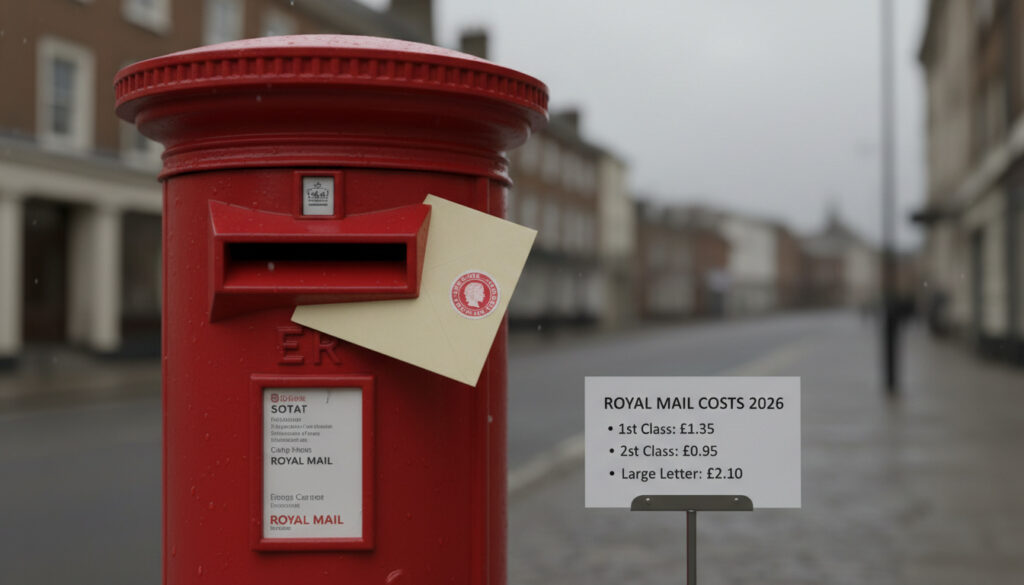
2nd Class Stamp Cost – UK Royal Mail Prices 2026
The cost of sending a standard letter by second class post in the United Kingdom stands at 91 pence as of April 2026, following the most recent regulatory price adjustment. This rate applies to standard letters weighing up to 100 grams and measuring no more than 353mm in length, 250mm in width, and 5mm in depth.
Royal Mail adjusts these tariffs under supervision from the communications regulator Ofcom, balancing the financial requirements of the Universal Service Obligation against sustained declines in mail volumes. The current pricing structure reflects decades of incremental increases, with the 2nd Class option remaining the economical choice for non-urgent correspondence.
Understanding the precise costs, weight thresholds, and legitimate purchasing channels helps consumers avoid overpayment and ensures compliance with Royal Mail’s sizing restrictions for letters and large letters alike.
How Much Does a 2nd Class Stamp Cost in 2026?
Standard Letter
Large Letter (up to 100g)
Cheapest Rate (per stamp in bulk sheet)
Last Price Change (+3%)
- Standard 2nd Class stamps cost 91p following the April 7, 2026 increase
- Cumulative price rises have reached 870% since the 10p rate of 1980
- Large letters start at £1.55 for up to 100g, scaling to £2.70 for 750g items
- Purchasing sheets of 50 stamps reduces the unit cost to 87p each
- 1st Class stamps cost approximately 87% more than 2nd Class equivalents
- All unused stamps remain valid indefinitely regardless of purchase date
- Ofcom regulates increases through inflation-linked and real-terms caps
| Format | Class | Weight Limit | Dimensions (max) | Price |
|---|---|---|---|---|
| Standard Letter | 2nd Class | 100g | 353 x 250 x 5mm | 91p |
| Standard Letter | 1st Class | 100g | 353 x 250 x 5mm | £1.70+ |
| Large Letter | 2nd Class | 100g | 353 x 250 x 25mm | £1.55 |
| Large Letter | 2nd Class | 101-250g | 353 x 250 x 25mm | £1.90 |
| Large Letter | 2nd Class | 251-500g | 353 x 250 x 25mm | £2.40 |
| Large Letter | 2nd Class | 501-750g | 353 x 250 x 25mm | £2.70 |
| Large Letter | 1st Class | 100g | 353 x 250 x 25mm | Higher than £1.55 |
Has the 2nd Class Stamp Price Increased Recently?
Royal Mail implemented a 3% price increase on April 7, 2026, raising the standard 2nd Class stamp from 88p to 91p. This adjustment follows a pattern of annual hikes authorised by Ofcom under the regulatory framework governing the Universal Service Obligation.
The April 2026 Adjustment
The latest increase represents the continuation of scheduled price changes designed to offset declining mail volumes and operational costs. Prior to this, prices stood at 87p throughout 2025 after rising from 85p at the end of 2024.
Historical Trajectory
The cost of a 2nd Class stamp has risen from 10p in 1980 to the current 91p, representing a cumulative increase of 870% over 46 years. Notable spikes include a 28% jump to 50p in 2012 and a 13% increase to 85p during 2024, which marked the third rise that calendar year according to historical pricing records.
Old stamps never expire. Any unused 2nd Class stamp purchased at previous rates remains fully valid for current postal use, regardless of when it was originally bought.
Where to Buy the Cheapest 2nd Class Stamps
The most economical method for purchasing 2nd Class stamps involves buying in bulk directly from the Royal Mail Shop. Sheets of 50 standard stamps cost £43.50, effectively reducing the unit price to 87p compared to the standard 91p rate.
Online and Bulk Options
Royal Mail’s official online store provides sheets of 50 Large Letter stamps for £77.50 (£1.55 each), matching the face value but offering convenience for high-volume senders. Pitney Bowes and other authorised franking machine providers also process postage at regulated rates, though these require account setup.
High Street Availability
Post Office branches, major supermarkets, and newsagents stock individual stamps and books at face value. While convenient for occasional use, these outlets rarely offer the per-unit savings available through direct bulk purchase from Royal Mail.
For parcel deliveries requiring collection point flexibility, services such as InPost Locker Near Me provide alternative logistics, though stamp purchases themselves must occur through Royal Mail authorised channels.
1st Class vs 2nd Class: Costs and Delivery Standards
The price differential between service classes has widened significantly in recent years. While 2nd Class standard letters cost 91p, 1st Class equivalents command £1.70 or higher, representing an 87% premium for the expedited service.
Standard Letter Comparison
Since 2020, 1st Class stamp prices have increased by 124% (from 76p to £1.70), while 2nd Class prices rose 34% over the same period (from 65p to 91p). A book of eight 1st Class stamps now costs £13.60, up from £6.08 in 2020, according to Citizens Advice research.
Large Letter Pricing Tiers
2nd Class Large Letters operate on a four-tier weight system. Items up to 100g require £1.55 postage, while the heaviest category (501-750g) demands £2.70. Each tier saw increases of 3% to 7% in April 2026, with the heaviest band experiencing the largest percentage jump from £2.50.
Standard letters must not exceed 5mm thickness. Large letters permit up to 25mm thickness but require the higher postage rates. Items exceeding 25mm thickness fall into parcel categories with separate pricing structures.
Delivery Time Expectations
Historically designated as a 2-3 working day service, 2nd Class delivery now frequently matches 1st Class timeframes due to shared transport networks across most mainland UK destinations. However, delivery data indicates Royal Mail has failed to meet annual success targets for five consecutive years, prompting Ofcom to review proposals for alternate-day 2nd Class delivery.
Regulatory reviews are currently examining potential reductions in 2nd Class delivery frequency to every other day, rather than daily delivery, as part of cost-saving measures under the Universal Service Obligation.
When mailing critical documents such as passports, understanding these postage tiers proves essential. Those seeking information about Who Can Sign a Passport should verify documentation requirements alongside appropriate postage selection.
How 2nd Class Stamp Prices Have Changed Over Time
- : 10p (baseline)
- : 17p (70% cumulative increase)
- : 19p (90% cumulative increase)
- : 32p (220% cumulative increase)
- : 50p (28% annual spike)
- : 65p (650% cumulative increase)
- : 75p (750% cumulative increase)
- : 85p (13% annual increase, third rise of year)
- : 87p
- : 91p (3% increase)
Sources: Price history data and Pitney Bowes rate change archives.
Confirmed Facts and Remaining Uncertainties
| Established Information | Unclear or Pending |
|---|---|
| Standard 2nd Class letter price: 91p (from April 7, 2026) | Exact date of next scheduled price review |
| Large letter rates: £1.55 to £2.70 depending on weight | Specific 1st Class large letter pricing (confirmed only as “higher”) |
| All unused stamps remain valid regardless of purchase date | Outcome of Ofcom’s alternate-day delivery consultation |
| Ofcom caps increases at CPI-linked or 5% real-terms levels | Future Universal Service Obligation scope beyond 2026 |
Why 2nd Class Prices Continue to Rise
The steady escalation in stamp prices reflects fundamental pressures on the postal service business model. Mail volumes have declined significantly since the digital communications revolution, yet Royal Mail maintains the Universal Service Obligation requiring daily delivery to every UK address at uniform pricing.
Ofcom regulates this balance through price caps that initially tracked the Consumer Prices Index (CPI), shifting to a 5% real-terms cap from April 2019. Regulatory frameworks established after the 2012 price spike now permit annual adjustments that reflect operational costs while protecting consumer interests.
Competition from digital alternatives and parcel delivery services has further strained the traditional letter mail model, necessitating tariff increases to maintain infrastructure for the mandatory universal service.
Official Statements and Regulatory Perspectives
The 2025 price increase was criticized as unjust given service quality concerns, with potential 2nd Class delivery cuts remaining under active regulatory review.
Citizens Advice, 2025
Consumer advocates have consistently challenged the relationship between price hikes and service quality, particularly regarding Royal Mail’s failure to meet delivery targets. Citizens Advice statements highlight ongoing concerns about whether consumers receive value commensurate with the 870% price increase seen since 1980.
Current Outlook for 2nd Class Postage
The 91p standard rate established in April 2026 represents the current baseline for economical UK postal service, with bulk purchasing offering marginal savings at 87p per stamp. Regulatory oversight continues through Ofcom, with potential service modifications including alternate-day delivery for 2nd Class items under active consideration. Those sending important documentation should verify requirements through resources such as Who Can Sign a Passport to ensure compliant mailing practices.
Frequently Asked Questions
What sizes qualify for standard 2nd class stamp?
Standard letters must measure maximum 353mm x 250mm x 5mm and weigh no more than 100g. Items exceeding these dimensions require Large Letter stamps starting at £1.55.
Can I still use old 2nd class stamps?
Yes. All unused Royal Mail stamps remain valid indefinitely regardless of when purchased or what price was paid at the time of acquisition.
How long does 2nd class post take?
Historically 2-3 working days, though shared transport networks now frequently deliver next day across mainland UK. However, Royal Mail has missed annual delivery targets for five consecutive years.
Where can I buy the cheapest 2nd class stamps?
The Royal Mail Shop sells sheets of 50 standard stamps for £43.50 (87p each), cheaper than individual purchases. Available online or at Post Office branches.
What is the price for 2nd class large letters?
£1.55 for up to 100g, £1.90 for 101-250g, £2.40 for 251-500g, and £2.70 for 501-750g, following the April 2026 rate changes.
What is the difference in cost between 1st and 2nd class stamps?
As of April 2026, 1st Class standard letters cost approximately 87% more than 2nd Class, with 1st Class at £1.70 or higher compared to 91p for 2nd Class.
Has the 2nd class stamp price increased in 2026?
Yes. Prices rose 3% from 88p to 91p on April 7, 2026, as regulated by Ofcom under the current pricing framework.
More related posts
 Katie Piper: Biography, Acid Attack, and Family Life
 Noel Fitzpatrick Vet: Partner, Accident, Net Worth
 Amy Dowden: Breast Cancer Journey and Strictly Come Dancing
 Sophia Katseye: Biography, Age, Ethnicity & Facts
 Malcolm McDowell: Family, Career, and Hollywood Connections
 Deal or No Deal Game: Rules, Strategy & Best Versions
 Dom Joly: Comedian, Net Worth, Wife, and School with bin Laden
 Lauren Graham Movies and TV Shows – Complete Filmography 2025