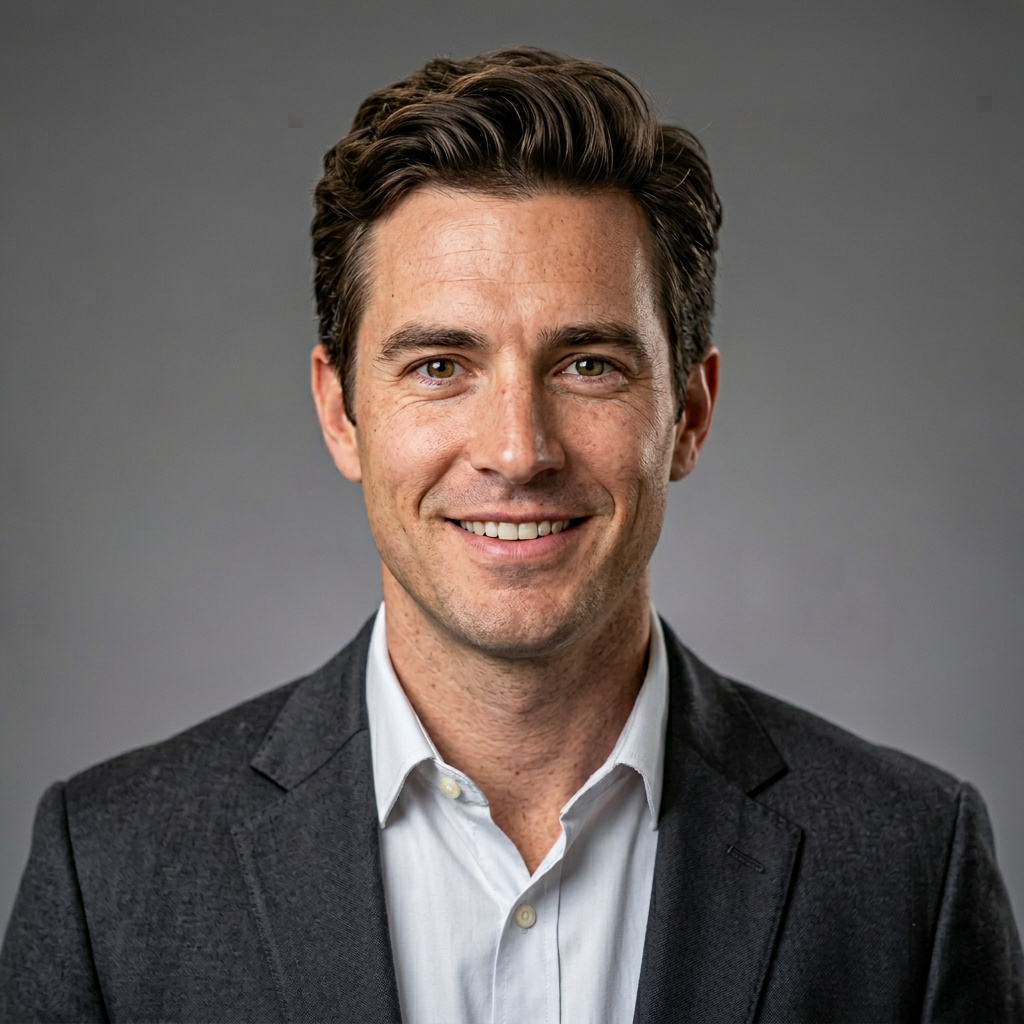
Eckhart Tolle: Biography, Core Teachings, and Controversies
Eckhart Tolle’s path from crippling depression to global spiritual influence is the kind of turnaround that makes you rethink the role of suffering. Born in 1948 in Germany, he spent years in a state of deep anxiety before a sudden awakening at 29 changed everything.
Born: 1948 ·
Books sold worldwide: over 35 million ·
YouTube subscribers: over 2.5 million ·
Number of books published: 5 ·
Primary language of works: English ·
Notable work: The Power of Now (1997)
Quick snapshot
- Born 1948 in Germany (Wikipedia (crowd-sourced encyclopedia))
- Suffered depression and anxiety in his 20s (Vietnamese Wikipedia (community-edited biography))
- Spiritual awakening at age 29 (Vietnamese Wikipedia)
- Books sold over 35 million copies (Wikipedia)
- Exact clinical diagnosis of his depression is not publicly documented (Biblical Spirituality (Christian commentary site))
- Details of his early life in Spain and England remain sparse (Biblical Spirituality (Christian commentary site))
- Net worth not verified by independent sources (Biblical Spirituality (Christian commentary site))
- 1948 – Born in Germany (Wikipedia)
- 1977 – Spiritual awakening (Vietnamese Wikipedia)
- 1997 – Publishes The Power of Now (Wikipedia)
- 2005 – Publishes A New Earth (Wikipedia)
- Continued influence via online courses and retreats
- Ongoing academic and religious critiques of his teachings
- Potential new publications or media appearances
Six key facts about Eckhart Tolle, one pattern: his life arc moves from academic study and personal crisis to a global platform built on a simple, radical message.
Below is the verified data driving that story.
| Fact | Detail |
|---|---|
| Full name at birth | Ulrich Leonard Tölle (Wikipedia) |
| Birth date | February 16, 1948 (Wikipedia) |
| Known as | German spiritual teacher and self-help author (Wikipedia) |
| Education | Studied philosophy, psychology, and literature at the University of London (Polish Wikipedia (community-edited biography)) |
| Notable works | The Power of Now (1997) and A New Earth (2005) (Wikipedia) |
| Religious affiliation | None; draws from Zen Buddhism, Christian mysticism, Sufism, Hinduism (Wikipedia) |
| Total books published | 5 (Wikipedia) |
| Languages of translations | Over 33 languages (Wikipedia) |
| YouTube subscribers | Over 2.5 million |
| Television exposure | Featured on Oprah Winfrey’s web series in 2008 (Wikipedia) |
What was Eckhart Tolle diagnosed with?
Symptoms and personal crisis
- According to the Vietnamese Wikipedia (community-edited biography), Tolle experienced “periods of depression” and “deep anxiety” in his early adulthood (Vietnamese Wikipedia).
- He has described feeling suicidal and that his “life was unbearable” (Wikipedia).
- No specific clinical diagnosis (e.g., major depressive disorder) has been publicly confirmed.
Path to spiritual awakening
- At age 29, reportedly while sitting on a park bench in London, Tolle experienced a sudden “inner transformation” (Vietnamese Wikipedia).
- He later described this as a complete dissolution of the ego and the beginning of his teaching career (Wikipedia).
- The Polish Wikipedia notes that after this event, he spent several years “wandering” before beginning to teach (Polish Wikipedia).
Tolle’s own narrative frames depression not as a disorder to be treated but as a catalyst for awakening. That framing is both the source of his appeal and a central point of contention: critics argue it risks romanticizing untreated mental illness.
The implication: Tolle’s personal crisis becomes the origin story for a teaching that puts “presence” above psychological diagnosis. For readers who have experienced clinical depression, this may feel empowering — or dangerously dismissive.
What is Eckhart Tolle’s main message?
The Power of Now
- According to Wikipedia, Tolle’s core teaching is that the present moment is the only reality and that human suffering arises from identification with the mind (Wikipedia).
- He argues that by focusing attention on the “Now,” individuals can transcend the ego and find peace (Wikipedia).
Ego dissolution
- Tolle teaches that the ego is a false self constructed from thoughts, memories, and conditioning (Wikipedia).
- He claims that the ego is the root of conflict, both personal and collective (Wikipedia).
Surrender to the present moment
- “Surrender” in Tolle’s framework means accepting what is without resistance, not passive resignation (Wikipedia).
- He distinguishes this from giving up; it is an active alignment with the flow of life.
For millions of stressed, anxious readers, the promise of escape from the thinking mind is intoxicating. But the same promise can become a trap: “presence” without critical thinking may lead to passivity in the face of injustice or systemic problems.
The catch: Tolle’s message is simple enough to fit on a bumper sticker, but that simplicity makes it vulnerable to misinterpretation — and to criticism from those who believe spiritual growth requires more than just “being here now.”
What are criticisms of Tolle’s teachings?
Simplistic synthesis of Buddhism and New Age
- James Beverley, a professor of religious studies, is quoted by Wikipedia as saying that Tolle “denies the core of Christianity” by blurring the distinction between humans and God (Wikipedia).
- John Stackhouse, another scholar, told Wikipedia that Tolle packages “a synthesis that borrows from established religions” (Wikipedia).
- Critics argue that his teachings reduce Zen Buddhism and Christian mysticism to a marketable formula (Spiritual Critiques (blog)).
Allegations of cultural appropriation
- Some critics claim that Tolle presents Eastern concepts without acknowledging their roots or the full context of the traditions he borrows from (Medium (essay platform)).
- This is seen as a form of “spiritual colonialism” that strips teachings of their communal and ethical dimensions.
Lack of empirical grounding
- Commentary from Concordor (a critique site) notes that Tolle’s claims about consciousness and the ego are not supported by scientific evidence (Concordor (critique blog)).
- The same source argues that his emphasis on presence can be interpreted as promoting inaction in the face of real-world problems.
The trade-off: Tolle’s critics see a well-packaged but shallow teaching that borrows heavily from traditions it does not honor. His defenders see a universal message that transcends labels. The truth likely sits somewhere in between — but the gap between those pictures is wide.
What was Eckhart Tolle’s famous quote?
“The primary cause of unhappiness is never the situation but your thoughts about it.”
- This quote is widely attributed to Tolle and appears in The Power of Now (Wikipedia).
- It encapsulates his core teaching: suffering is not caused by external events but by our mental interpretation of them.
“You are not your thoughts.”
- Another foundational Tolle statement, often used to encourage detachment from the thinking mind.
- It is a key part of his practice of “witnessing consciousness.”
“Whatever you fight, you strengthen, and what you resist, persists.”
- This quote underscores his teaching of surrender and non-resistance.
- It is frequently cited in discussions about dealing with difficult emotions.
What these quotes share: they are memorable, quotable, and immediately actionable. But their very simplicity — the reason they spread so easily on social media — is also why critics find them reductionist.
What does Eckhart Tolle think of Trump?
Trump as a mirror of collective ego
- According to Wikipedia, Tolle has described Donald Trump as a “mirror of the collective ego” — a figure who reflects the world’s unconsciousness back to itself (Wikipedia).
- He has said that Trump’s behavior highlights the need for spiritual awakening on a global scale.
No personal animosity
- Tolle emphasized that he has no personal animosity toward Trump; he views him as a symptom of a larger collective condition (Wikipedia).
- He has not endorsed any political candidate or party.
Focus on the phenomenon
- Rather than analyzing Trump’s policies, Tolle focuses on the psychological and spiritual phenomenon of his rise.
- This approach has been criticized as apolitical and evasive by those who want a clearer stance on social issues.
The pattern: Tolle’s response to Trump is consistent with his teaching — observe without judgment, see the ego at work — but it frustrates those who expect a spiritual leader to take a stand on concrete political harm.
What books did Eckhart Tolle write?
The Power of Now (1997)
- His first and most famous book, originally self-published before being picked up by New World Library (Wikipedia).
- Has sold millions of copies worldwide and been translated into over 33 languages (Wikipedia).
A New Earth (2005)
- His second major work, subtitled Awakening to Your Life’s Purpose (Wikipedia).
- Gained massive exposure when Oprah Winfrey selected it for her book club in 2008 and hosted a series of webinars with Tolle (Wikipedia).
Stillness Speaks (2003)
- A shorter, more meditative book of aphorisms and contemplations.
- Intended as a companion to The Power of Now.
The Flowering of Human Consciousness (2000)
- A collection of teachings and dialogues.
- Less widely known than his main works but still popular among dedicated followers.
The pattern: Tolle’s bibliography is small but highly focused. Each book reinforces the same core message, which explains both his loyal following and the criticism that he is repetitive.
Timeline: Key moments in Eckhart Tolle’s life
| Year | Event |
|---|---|
| 1948 | Born in Germany (Wikipedia) |
| 1977 | Spiritual awakening at age 29 (Vietnamese Wikipedia) |
| 1997 | Publishes The Power of Now (Wikipedia) |
| 2003 | Publishes Stillness Speaks |
| 2005 | Publishes A New Earth (Wikipedia) |
| 2008 | Featured on Oprah Winfrey’s web series (Wikipedia) |
Clarity check: what we know and what we don’t
Confirmed facts
- Born 1948 in Germany (Wikipedia)
- Studied at University of London (Polish Wikipedia)
- Spiritual awakening at 29 after depression (Vietnamese Wikipedia)
- The Power of Now and A New Earth are his best-known works (Wikipedia)
- Books sold over 35 million copies (Wikipedia)
What’s unclear
- Exact clinical diagnosis not documented
- Details of his early life in Spain and England sparse (Biblical Spirituality (Christian commentary site))
- Net worth unverified
- Whether his teachings are supported by empirical research (Concordor (critique blog))
- Whether he fully acknowledges the sources of his ideas (Medium (essay platform))
Quotes: Tolle and his critics
“The primary cause of unhappiness is never the situation but your thoughts about it.”
— Eckhart Tolle, The Power of Now (Wikipedia)
“Tolle denies the core of Christianity by blurring the distinction between humans and God and Jesus.”
— James Beverley, professor of religious studies, as quoted by Wikipedia
“Trump is a mirror of the collective ego. He reflects the world’s unconsciousness back to itself.”
— Eckhart Tolle, as reported by Wikipedia
For spiritual seekers navigating a crowded market of self-help gurus, Tolle’s work offers a compelling but incomplete toolkit. The task ahead is to separate the transformative insights from the oversimplifications — and to ask whether “presence” alone is enough to address the structural and psychological challenges of modern life. For anyone considering adopting his teachings wholesale, the choice is clear: engage critically, or risk mistaking a partial truth for the whole picture.
eo.wikipedia.org, reddit.com, ru.wikipedia.org, watchman.org, reiwachronicle.tokyo
For those seeking a deeper dive into his most famous work, explore our detailed guide to The Power of Now.
Frequently asked questions
What is Eckhart Tolle’s net worth?
His net worth is not publicly verified. Various estimates range from $10 million to $20 million, but no independent source has confirmed these figures.
Who influenced Eckhart Tolle?
According to Wikipedia, his teachings draw from Zen Buddhism, Christian mysticism, Sufism, and Hinduism (Wikipedia). He has also cited the Bible and Taoist texts.
What is Eckhart Tolle’s religion?
He is not affiliated with any specific religion. He describes his teachings as universal and accessible to people of all faiths or none (Wikipedia).
What is the connection between Eckhart Tolle and Kendrick Lamar?
Kendrick Lamar has referenced Tolle’s ideas in his music, notably in the album To Pimp a Butterfly, where the track “Mortal Man” includes themes of presence and ego. Tolle has not publicly commented on the connection.
Where does Eckhart Tolle live?
He currently resides in Vancouver, Canada, though he travels frequently for speaking engagements and retreats.
What is Eckhart Tolle’s educational background?
According to the Polish Wikipedia, he studied philosophy, psychology, and literature at the University of London (Polish Wikipedia). He also studied at the University of Cambridge as a researcher and supervisor, per the Portuguese Wikipedia (Portuguese Wikipedia).
Has Eckhart Tolle faced any controversies?
Yes, he has faced criticism from evangelical Christians, academic Buddhists, and secular commentators. Criticisms include cultural appropriation, oversimplification of complex traditions, and lack of scientific grounding (Wikipedia).
More related posts
 Garden Recliner Chairs: Best Outdoor Recliner Guide
 Ronnie Corbett: Life, Career, Illness, and Death
 Jarell Quansah: Transfer Fee, Nationality, Why He Left Liverpool
 Where to Watch The Sopranos – Streaming Options 2024
 Martin Kemp: Illness, Net Worth, Family, and Feuds Explained
 Tyler Perry: Net Worth, Biography, and How He Became a Billionaire
 Arsenal vs Athletic Club: Preview, How to Watch & Prediction
 Matt Married at First Sight: Relationship Status and News