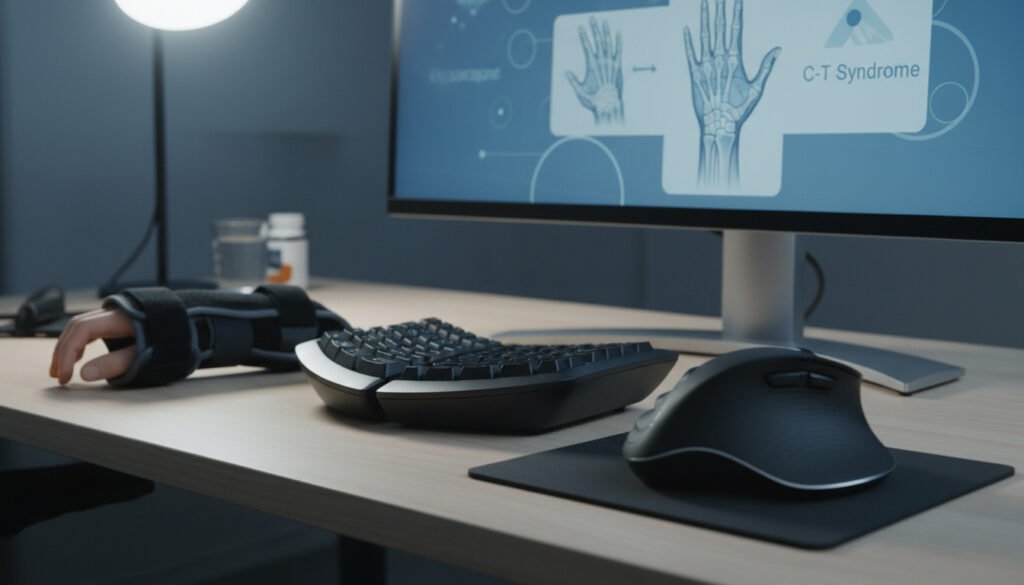
What Is Carpal Tunnel – Symptoms, Causes, Diagnosis & Treatment
Carpal tunnel syndrome represents one of the most common nerve compression disorders affecting the upper extremity. The condition develops when the median nerve becomes compressed within the carpal tunnel, a narrow passageway located at the wrist, resulting in characteristic pain, numbness, and tingling sensations that can significantly impair hand function and daily activities.
While repetitive computer work often receives blame, the reality involves a complex interplay of anatomical predisposition, systemic health factors, and occupational demands. Understanding the true mechanisms behind carpal tunnel syndrome enables patients to seek appropriate care before permanent nerve damage occurs, with early intervention significantly improving long-term outcomes.
This comprehensive guide examines the medical definition, progression patterns, diagnostic criteria, and evidence-based treatment approaches for carpal tunnel syndrome, drawing from current clinical research and orthopedic practice.
What Is Carpal Tunnel Syndrome?
Definition
Compression of the median nerve as it travels through the carpal tunnel at the wrist, disrupting normal sensory and motor function.
Common Symptoms
Numbness, tingling, and pain affecting the thumb, index, and middle fingers, often worse during nighttime hours.
Primary Causes
Repetitive hand movements, anatomically narrow wrist structures, and systemic conditions causing fluid retention or inflammation.
Treatment Overview
Conservative management including bracing and therapy, progressing to surgical release for severe or refractory cases.
Key Insights
- Prevalence: Affects approximately 3-6% of adults, with higher incidence in specific occupational groups.
- Demographics: Women and adults aged 40-60 experience higher rates of occurrence, though the condition can develop at any age.
- Myth Clarification: While repetitive typing contributes, carpal tunnel syndrome stems from multiple factors including wrist anatomy and systemic health conditions, not solely computer use.
- Prevention Critical: Early recognition remains essential to prevent permanent median nerve damage and muscle atrophy.
- Treatment Success: Surgical intervention achieves approximately 90% symptom relief for appropriately selected patients.
- Diagnostic Boundary: Numbness in the little finger indicates a different condition, as the median nerve does not innervate that digit.
- Classification: Occupational CTS differs from idiopathic forms by direct connection to workplace activities versus spontaneous anatomical or hormonal variations.
| Fact | Detail |
|---|---|
| Affected Nerve | Median nerve |
| Anatomical Location | Carpal tunnel at the wrist |
| Prevalence Rate | 3-6% of adults |
| Highest Risk Groups | Women, ages 40-60 |
| Progression Timeline | Weeks to permanent damage if untreated |
| Surgical Success Rate | 90% experience symptom relief |
What Are the Symptoms of Carpal Tunnel Syndrome?
Symptom presentation follows a characteristic pattern that helps distinguish carpal tunnel syndrome from other upper extremity conditions. Patients typically report pain, numbness, and tingling in the hand and fingers, occasionally accompanied by weakness.
Early Signs and Sensory Changes
Initial symptoms often emerge during specific activities or times of day. Many patients experience symptoms while holding a phone or newspaper, gripping a steering wheel, or performing sustained hand positions. Nocturnal symptoms prove particularly common, frequently waking patients from sleep due to numbness or burning sensations in the affected hand.
The sensory distribution follows the median nerve pathway, affecting the thumb, index finger, middle finger, and the radial side of the ring finger. Crucially, numbness occurring in the little finger suggests an alternative diagnosis, as the median nerve does not provide sensation to that digit.
Motor Symptoms and Progression
As compression advances, patients may develop weakness in hand grip and pinch strength. Advanced cases demonstrate thenar muscle atrophy—the wasting of muscles at the base of the thumb—indicating significant nerve compromise requiring urgent intervention.
If numbness includes the little finger, the condition likely involves something other than carpal tunnel syndrome, such as cervical radiculopathy or ulnar nerve entrapment. The median nerve specifically innervates the thumb, index, middle, and radial half of the ring finger only.
What Causes Carpal Tunnel Syndrome?
Carpal tunnel syndrome develops through a complex interaction of anatomical, biomechanical, and pathophysiological factors rather than a single isolated cause. Understanding these mechanisms enables targeted prevention and treatment strategies.
Anatomical and Biomechanical Factors
The carpal tunnel itself is a rigid anatomical structure bounded by bones and ligaments. Individuals with narrower carpal tunnel dimensions face heightened compression risk. Wrist posture significantly influences pressure within this space—flexion-based positions exert increased pressure on the median nerve, explaining why certain activities and sleeping positions aggravate symptoms.
Pathophysiologically, chronic compression triggers a cascade of irritation, inflammation, and ischemic damage to the nerve tissue itself. This mechanical insult disrupts normal nerve conduction, producing the characteristic sensory and motor symptoms.
Occupational and Systemic Risk Factors
Multiple variables increase susceptibility to nerve compression. Repetitive hand movements—common in assembly line work, prolonged computer use, and forceful gripping activities—contribute to cumulative microtrauma. Systemic factors include obesity, which increases pressure on the median nerve, and health conditions such as diabetes, thyroid disorders, and rheumatoid arthritis. Pregnancy-related fluid retention represents another significant risk factor, causing temporary nerve compression that often resolves postpartum.
Adults aged 30-60 years show higher incidence rates, and genetic predisposition may influence individual susceptibility. Occupational CTS specifically connects to workplace activities through cumulative microtrauma, differing from idiopathic cases that arise spontaneously without clear external triggers.
How Is Carpal Tunnel Syndrome Diagnosed?
Accurate diagnosis requires clinical correlation of symptoms with objective testing, distinguishing carpal tunnel syndrome from conditions presenting similarly, such as cervical radiculopathy, de Quervain tenosynovitis, or carpometacarpal arthritis of the thumb.
Clinical Assessment
Physicians evaluate symptom patterns, physical examination findings including Tinel’s sign and Phalen’s maneuver, and functional limitations. While Phalen’s maneuver—holding wrists in flexion to reproduce symptoms—offers a simple self-test, definitive diagnosis requires additional validation.
Electrophysiological Testing
Nerve conduction studies and electromyography provide objective evidence of median nerve compression by measuring signal velocity and muscle response. These tests quantify the severity of nerve damage and help exclude alternative diagnoses. Differential diagnosis remains essential to rule out cervical radiculopathy, de Quervain tendinopathy, and other conditions mimicking CTS.
Delayed diagnosis risks permanent median nerve damage and muscle atrophy. Early recognition significantly improves recovery likelihood and prevents long-term functional impairment.
While home tests like Phalen’s maneuver can suggest carpal tunnel syndrome, they cannot replace electrophysiological testing and clinical examination required for definitive diagnosis and severity grading.
What Are the Treatment Options for Carpal Tunnel Syndrome?
Treatment progression follows a stepped-care approach, beginning with conservative measures for mild symptoms and advancing to surgical intervention for severe or refractory cases.
- Early Stage (Weeks 0-4): Intermittent tingling at night prompts activity modification and neutral-position wrist splinting, particularly during sleep.
- Conservative Phase (Weeks 4-12): Intermittent wrist exercises, manual therapy focusing on the neck and median nerve, ergonomic workplace modifications, and task-specific changes. Research confirms that 30-minute weekly manual therapy combined with home stretching produces beneficial results.
- Injection Phase: Steroid injections provide temporary symptom reduction for patients requiring rapid relief or those with inflammatory components.
- Progressive Symptoms (Months 3-6): Daytime numbness and decreased grip strength indicate progression requiring intensified intervention.
- Surgical Evaluation: Constant numbness, thenar muscle atrophy, or markedly abnormal nerve conduction studies indicate surgical candidacy.
- Carpal Tunnel Release: Surgery becomes indicated when conservative measures fail or severe nerve damage is present. Early occupational therapy following surgery impacts pinch strength and pain outcomes.
- Recovery Phase (4-6 weeks post-surgery): Gradual return to activities with occupational therapy support to maximize functional restoration.
Complementary practices including yoga for hand flexibility, cold therapy, and targeted massage may provide adjunctive relief. Cold therapy and massage of the affected area represent additional conservative options.
Can Carpal Tunnel Syndrome Go Away on Its Own? What We Know and Don’t Know
| Established Facts | Uncertain or Evolving Understanding |
|---|---|
| Anatomy-based compression of the median nerve is the definitive mechanism | Exact triggers in idiopathic cases (those without occupational cause) |
| Conservative treatment effectively manages mild to moderate cases | Long-term natural history without any intervention |
| Surgical release achieves 90% symptom relief in appropriately selected patients | Whether treating underlying inflammatory arthritis definitively reduces CTS symptoms |
| Pregnancy-related CTS often resolves postpartum as fluid retention decreases | Precise genetic markers predicting individual susceptibility |
| Occupational ergonomic modifications prevent progression | Optimal duration and intensity of manual therapy protocols |
Understanding the Carpal Tunnel: Anatomy and Function
The carpal tunnel is a rigid, fibro-osseous canal at the wrist through which the median nerve passes alongside nine flexor tendons. This unyielding structure leaves minimal room for expansion, explaining why even minor swelling or anatomical variation can precipitate nerve compression. Individuals with congenitally narrower tunnels face inherently higher risk.
Chronic compression initiates pathophysiological changes including demyelination and ischemic nerve damage. While genetic factors influence tunnel dimensions, lifestyle factors and occupational demands determine whether an anatomically predisposed individual develops symptomatic disease. Those managing childcare responsibilities or Soft Play Near Me – Best Centres, Ages, Costs & Tips frequent visits should note that lifting and repetitive hand use in these activities may aggravate existing symptoms.
Current research highlights the need for unified diagnostic and treatment protocols across studies to better understand the multifactorial nature of this condition. Comprehensive workplace assessments and ergonomic redesigns remain critical for prevention, particularly in high-risk occupations.
Expert Perspectives on Carpal Tunnel Syndrome
If numbness occurs in the little finger, this may indicate a different condition, as the median nerve does not provide sensation to that finger.
Mayo Clinic Clinical Guidelines
Occupational carpal tunnel syndrome represents a significant workplace health concern requiring comprehensive ergonomic interventions and employee education to mitigate cumulative microtrauma risks.
Frontiers in Public Health Research, 2024
Key Takeaways on Carpal Tunnel Syndrome
Carpal tunnel syndrome results from median nerve compression within the wrist’s anatomical constraints, producing characteristic numbness and pain in specific finger distributions. While repetitive motions contribute to risk, the condition involves complex interactions between anatomy, systemic health, and occupational demands. Early diagnosis through clinical evaluation and nerve conduction studies enables effective conservative management including splinting, ergonomic modification, and manual therapy, with surgical release reserved for advanced or refractory cases. Prompt recognition prevents permanent nerve damage and optimizes functional recovery. Entertainment activities requiring minimal repetitive hand strain, such as viewing Lauren Graham Movies and TV Shows – Complete Filmography 2025, may offer suitable recreational options during recovery periods.
Frequently Asked Questions
What is the difference between carpal tunnel and arthritis?
Carpal tunnel syndrome involves nerve compression causing numbness and tingling, while arthritis affects the joints themselves causing pain and stiffness. Unlike CTS, arthritis may affect the little finger and typically presents with visible joint inflammation rather than specific nerve distribution patterns.
How do you test for carpal tunnel at home?
Phalen’s maneuver—holding wrists in forced flexion for 60 seconds—may reproduce symptoms. However, home testing cannot confirm diagnosis or assess severity; definitive diagnosis requires nerve conduction studies and clinical examination.
Are there exercises for carpal tunnel relief?
Intermittent wrist exercises and stretching, combined with yoga for hand flexibility, provide relief for mild symptoms. Manual therapy focusing on the neck and median nerve for 30 minutes weekly shows documented benefits.
Can carpal tunnel syndrome go away on its own?
Pregnancy-related CTS often resolves postpartum. Mild cases may improve with activity modification, but moderate to severe cases typically require intervention to prevent permanent nerve damage and muscle atrophy.
Is carpal tunnel caused by typing?
While repetitive hand movements including typing contribute to occupational CTS, the condition stems from multiple factors including wrist anatomy, obesity, diabetes, and genetic predisposition—not computer use alone.
What is occupational carpal tunnel syndrome?
Occupational CTS directly connects to workplace activities involving repetitive motions, forceful gripping, or poor ergonomic practices, unlike idiopathic CTS which arises spontaneously from anatomical or hormonal variations.
More related posts
 John Hughes Death: Cause, Funeral, and Molly Ringwald
 The Range Merry Hill: Store Guide
 Harry Potter Quizzes: Best Online Tests for House & Character
 Kyren Wilson: Family Health – Wife Stroke, Son Illness, Dad’s MS
 King Charles III: Health, Succession & Residence Facts
 How Many Calories in a Chicken Breast? Raw vs Cooked
 DNA Test Ireland 2025: Cost, Accuracy & Where to Buy
 Can Dogs Eat Watermelon – Safety and Benefits Guide