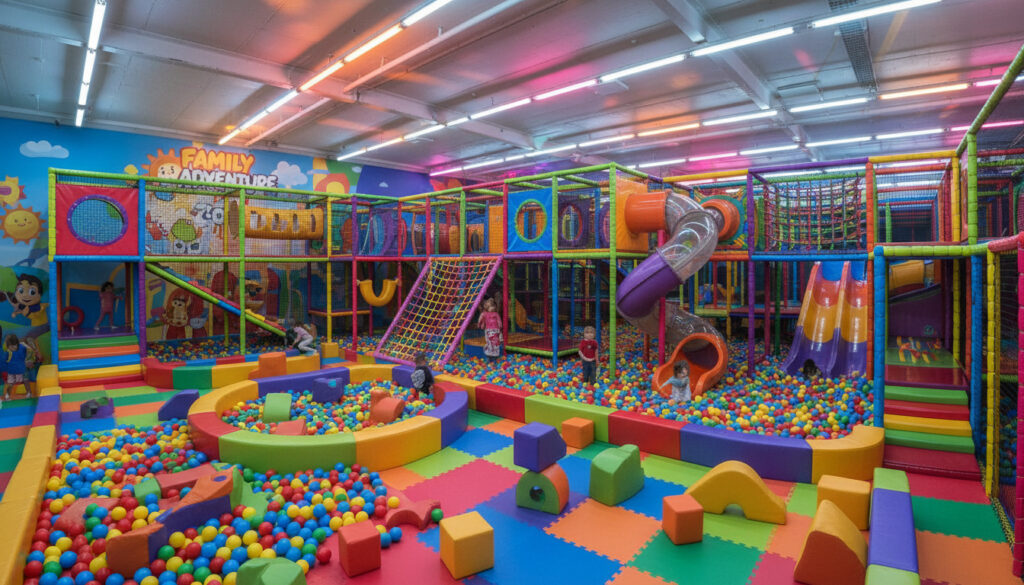
Soft Play Near Me – Best Centres, Ages, Costs & Tips
Soft play centres provide padded indoor environments where children climb, slide and explore regardless of weather conditions. These facilities feature ball pits, foam pits, sensory zones and climbing frames designed specifically for safe physical activity.
Parents searching for local options discover venues catering to babies as young as newborns up to primary school ages. Oxygen Activeplay and similar centres emphasize all-weather play that supports motor skills and social interaction while maintaining separation between age groups.
Understanding session structures, safety certifications and age-appropriate zones helps families select venues that match their children’s developmental needs and their own logistical preferences.
Where to Find Soft Play Near Me
Padded play zones featuring foam pits, ball pools and climbing apparatus for children from birth to 12 years.
Structured environments supporting gross motor skills, spatial awareness and social interaction in secure settings.
Filter searches by age restrictions, session times and cafe facilities to locate suitable nearby venues.
Advance booking via venue apps often required; term-time weekday mornings offer quietest experiences for toddlers.
- Most UK towns host multiple centres within 15-minute driving distances
- Better soft play centres operate 30+ locations nationwide with not-for-profit pricing
- London provides particularly dense coverage with tube-accessible venues featuring lift access
- Many venues now require digital booking via proprietary applications
- Term-time weekday mornings between 9am and 11am present optimal quiet periods for under-5s
- Dedicated baby areas physically separate under-1s from older children’s activity zones
- On-site cafes serve hot drinks and pastries, enabling extended parent stays
| Fact | Details |
|---|---|
| Typical Cost | £2–£12 per child depending on age and venue type |
| Age Range | 0–12 years (varies significantly by location) |
| Session Length | 1–2 hours standard play slots |
| Safety Standard | BS EN 1176-10:2018 compliance required |
| Inspection Frequency | Bi-annual servicing plus annual PIPA for inflatables |
| Peak Quiet Times | Weekday mornings during school terms |
| Booking Method | Website or mobile application typically required |
| Accessibility | Many London venues offer step-free tube/DLR access |
For comprehensive regional listings, consult guides to London’s coolest indoor play spaces by area, which detail venues with specific baby facilities and hygiene ratings.
What Age is Soft Play Suitable For?
Babies and Under-1s
Facilities increasingly accommodate infants from birth to 18 months through dedicated sensory playrooms. Little Burrowers operates specific rooms for 0–18 month olds featuring padded pens, baby gyms with sprung floors and foam pools that protect developing bodies while encouraging early movement.
Toddlers and Preschoolers
The majority of centres focus services on under-5s, recognising this demographic’s specific safety and stimulation requirements. Big Little Fun in Stratford restricts entry exclusively to under-5s, eliminating collision risks with older children while providing age-appropriate climbing structures and slides.
Little Jungle structures its facility into tiered systems: a two-tier frame for under-4s and a three-tier structure accommodating 1–8 years, allowing gradual progression as physical confidence develops. Oxygen Activeplay hosts supervised toddler-specific sessions for 0–5 year olds with modified equipment configurations.
School-Age Children
While many soft play centres cap entry at age 8 or 10, some accommodate older children through multi-level frames and advanced climbing challenges. Better centres specifically design areas for children up to 8–10 years, maintaining the padded safety environment while increasing physical complexity.
Physical separation between age zones prevents larger children from inadvertently injuring babies and toddlers. Electronic door systems and distinct room configurations enforce these boundaries, with separate sensory rooms for under-2s and main structures for older children.
Are Soft Play Areas Safe?
Regulatory Compliance
Reputable centres adhere to BS EN 1176-10:2018 standards governing indoor play equipment safety. Better centres additionally comply with RoSPA (Royal Society for the Prevention of Accidents) regulations, undergoing bi-annual servicing and independent inspections. Annual PIPA testing applies specifically to inflatable structures.
Physical Safety Features
Modern facilities employ padded flooring throughout play zones, secure entry doors with electronic controls, and transparent sight-lines enabling parental supervision from seating areas. Age-segregated zones prevent older children from accessing baby-specific areas, reducing collision risks.
Hygiene Standards
Cleanliness varies by venue, though inspection ratings provide guidance. Centres such as Britannia Centre and WFFGC receive recognition for maintaining high hygiene standards. Parents report that manageable, quiet sessions during term-time mornings offer cleaner environments with fewer children sharing equipment.
While equipment meets safety standards, active parental supervision remains essential. Centres require adults to remain on-site, with some venues permitting parents to join children on specific structures to assist with navigation.
How Much Does Soft Play Cost?
Standard Admission
Entry fees remain affordable for families, typically ranging from £2 for under-1s to £5 for under-5s. Under1Roof in Woolwich charges £2 for under-1s and £5 for children aged 1–5 years. Not-for-profit operators maintain lower price points to ensure accessibility across socioeconomic backgrounds.
Party Packages
Birthday celebrations represent significant revenue streams with tailored packages for under-5s. Oxygen Activeplay offers toddler trampoline parties, while Little Jungle provides private party pods. Big Little Fun accommodates exclusive under-5s celebrations with structured activity sessions.
Download venue-specific applications before visiting, as many centres require advance digital booking even for standard play sessions. Weekend slots and party hours fill fastest; weekday mornings typically offer walk-in availability.
When is the Best Time to Visit Soft Play?
- Term-time weekday mornings (9am–11am) offer quietest sessions with minimal crowding, ideal for babies and shy toddlers.
- Weekend early openings (9am starts at venues like ZAPspace) provide cleaner environments before peak accumulation of visitors.
- Afternoon weekday slots suit parents with morning commitments, though these coincide with older siblings finishing school.
- Weekend party hours (typically 11am–1pm and 3pm–5pm) see maximum capacity and should be avoided for casual visits.
- School holiday mornings remain manageable for under-5s if arriving at opening time, though older children populate afternoon sessions.
What Certifications Guarantee Soft Play Safety?
| Established Standards | Uncertain or Variable Factors |
|---|---|
| RoSPA compliance and bi-annual inspections verify equipment integrity | Specific NHS guidelines for soft play environments remain unpublished |
| BS EN 1176-10:2018 mandates specific padding and structural requirements | Real-time cleanliness depends on staff turnover and daily visitor volume |
| Annual PIPA certification covers all inflatable play equipment | Individual child readiness varies regardless of posted age limits |
| Electronic access controls enforce age-segregated zones physically | Proximity to your specific postcode requires direct verification |
How Does Soft Play Support Development?
These environments facilitate gross motor development through climbing, crawling and balancing activities impossible to replicate safely in domestic settings. Sensory rooms with varied textures and lighting configurations stimulate neurological development in babies, while open play structures encourage risk assessment and spatial awareness in toddlers.
Social interaction emerges naturally in shared spaces, with children learning turn-taking and cooperative play through unstructured interaction. Little Burrowers and similar centres design their cafes to foster parent networking, creating community support systems alongside child development opportunities.
What Reviews Reveal About Local Centres
Parent feedback consistently emphasizes cleanliness and manageable capacity over flashy equipment. Venues maintaining strict age restrictions receive particular praise for creating “blissfully quiet” environments where young children explore without intimidation.
The baby gym at Talacre remains unbeatable for under-5s, with sprung flooring that protects wobbly toddlers while they build confidence.
Parent review via Bablands
Long-term loyalty metrics indicate families returning to specific venues for five or more years, suggesting that consistency in safety standards and staffing matters more than novelty attractions. Time Out reports that centres permitting parental participation on equipment tend to receive higher satisfaction ratings from families with multiple children.
Finding the Right Soft Play Near You
Selecting an appropriate venue requires balancing proximity against specific age offerings and safety certifications. Prioritise centres with demonstrated RoSPA compliance and clear age segregation policies, particularly for families with multiple children spanning different developmental stages. Better soft play centres offer consistent standards across 30+ UK locations, while independent venues often provide specialized baby facilities or unique thematic environments. Verify current session availability through official booking applications before travelling, as capacity restrictions increasingly limit walk-in admissions.
Common Questions About Soft Play
What is soft play?
Soft play describes indoor play areas featuring padded structures, foam pits and ball pools designed for safe physical activity regardless of weather conditions.
Can adults enter the soft play structures?
Policies vary by venue; some centres permit parents to accompany children on equipment, particularly in toddler zones, while others restrict structures to children only. Check specific house rules before visiting.
Is advance booking necessary?
Most modern centres require advance booking via website or mobile application, particularly for weekend sessions. Weekday mornings during term time sometimes accept walk-ins depending on capacity.
What should children wear?
Children require long sleeves and long trousers to prevent friction burns on slides, plus grippy socks mandatory at all venues. Jewellery and sharp accessories must be removed before entry.
Are food and drink permitted?
Most centres prohibit outside food within play areas but provide on-site cafes or designated picnic zones. Baby food and milk exemptions usually apply with prior arrangement.
Can sick children attend soft play?
Children displaying symptoms of illness, particularly stomach bugs or contagious conditions, should avoid soft play for 48 hours after symptoms resolve to prevent transmission through shared equipment.
More related posts
 Kaya Scodelario: Age, Husband, Children, Movies & TV
 TUI All Inclusive Holidays 2026/2027: Deals, Inclusions & Tips
 Ruby Rose: Gender Identity, Diagnosis, and Batwoman Exit
 My Sweet Smile Reviews: Does Whitening Powder Work?
 Alex de Minaur: ATP Ranking, Net Worth & Relationship
 DWP State Pension Age Change 2026: Dates & Timetable
 Sara Arjun Biography: Age, Father, Movies, Ranveer Singh
 Blood Types: Rarest, Most Common, and What You Need to Know