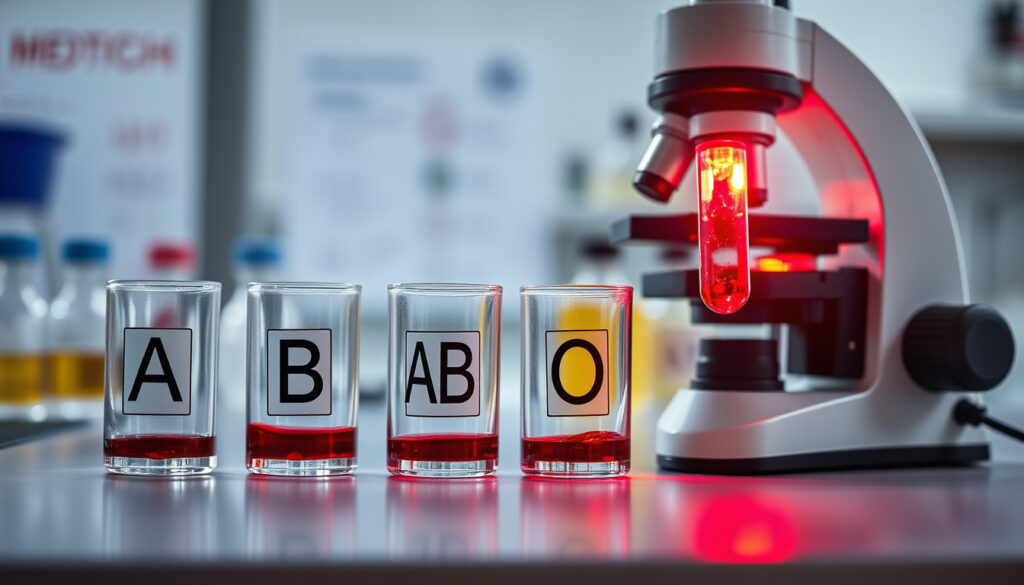
Blood Types: Rarest, Most Common, and What You Need to Know
Few things are as personal, yet as universally shared, as the blood running through your veins. But knowing which of the eight main blood types you carry can mean more than satisfying curiosity — it’s the difference between a safe transfusion and a serious reaction.
Total blood groups: 8 · Most common blood type (global): O+ · Rarest blood type: AB- · Population with O blood: 47% · Irish with O+ blood: 53%
Quick snapshot
- AB- is the rarest blood type globally (NHS Blood Donation)
- O+ is the most common blood type worldwide (Irish Blood Transfusion Service)
- O- is the universal donor for red blood cells (NIBTS)
- AB+ is the universal recipient (NIBTS)
- The exact blood type of Jesus cannot be scientifically determined
- The global percentage of AB- varies by region and study
- Personality associations with blood type lack scientific consensus
- The exact date of the ABO system discovery is not precisely documented in ancient texts
- The precise O+ percentage in Ireland differs between population surveys (47%) and donor records (53%)
- Continued research into rare subtypes helps match donors with precision
- Advances in blood substitute technology may reshape donation needs
- Personalised medicine increasingly considers blood type for treatment
Eight blood groups, one clear pattern: the ABO and Rh systems define who can give to whom.
| Fact | Details |
|---|---|
| Total blood groups | 8 |
| Rarest blood type | AB- (NHS Blood Donation) |
| Most common blood type | O+ (Irish Blood Transfusion Service) |
| Global O+ frequency | ~38% |
| Irish O+ frequency | ~53% |
| Universal donor | O- (NIBTS) |
| Universal recipient | AB+ (NIBTS) |
This article draws on data from the Irish Blood Transfusion Service, NHS Blood Donation, Canadian Blood Services, and peer-reviewed genetic research to provide an evidence-based overview of blood types.
What is the rarest blood type?
Global rarity rankings
- AB-: ~1% — the rarest (NHS Blood Donation (UK blood service))
- B-: ~2%
- AB+: ~3%
- A-: ~6%
- O-: ~7%
- B+: ~9%
- A+: ~30%
- O+: ~38% — the most common (Irish Blood Transfusion Service)
AB negative blood type
AB negative is so rare that blood services specifically target donors who carry it. Because AB- donors are the only source of AB- red cells, their scarcity creates a permanent challenge for hospitals. The NHS Blood Donation notes that fewer than one in a hundred people in the UK are AB-.
A rare blood type means a smaller pool of matched recipients — but every donation from an AB- donor is disproportionately valuable for patients with the same type.
The implication: maintaining a stable supply of AB- blood requires constant vigilance by donor services like the Irish Blood Transfusion Service.
What are the most common blood types?
O+ as the most common
O positive is the most common blood type globally, carried by about 38% of people. Its prevalence means it is always in high demand: hospitals rely on O+ red cells for a large share of emergency transfusions. According to the Irish Blood Transfusion Service (national blood authority), O blood accounts for roughly 46% of the world’s population.
Distribution percentages
- O+: ~38% – the global standard
- A+: ~30% – the second most common
- B+: ~9% – significant in Asian populations
- All Rh-negative types combined: roughly 15% of the population
The pattern: O+, A+, and B+ cover more than 75% of the global population, making them the backbone of any national blood supply. Services like the American Red Cross (humanitarian blood provider) rely on O+ donors to meet the highest daily demand.
What blood type do most Irish people have?
Blood type distribution in Ireland
In Ireland, O positive is by far the most common blood group. The Irish Blood Transfusion Service (national blood authority) reports that 47% of the Irish population is O+. A 2021 study published in PMC / NIH (peer-reviewed genetics research) found the full ABO breakdown to be:
- Group O: 54.95%
- Group A: 29.82%
- Group B: 12.02%
- Group AB: 3.21%
The same study reported that 82.34% of Irish donors are RhD-positive, while 17.66% are RhD-negative. Historical data from Nature (genetics journal) confirms Rh-positive frequency at 83.87% among 21,894 donors, closely matching modern figures. The study also examined Kidd phenotypes, finding Jk(a+b+) as the most common at 49.63%, followed by Jk(a+b-) at 27.02% and Jk(a-b+) at 23.34%.
Comparison with global averages
Ireland’s O blood frequency (55%) is significantly higher than the global average (~46%). The Irish Blood Transfusion Service also notes a higher concentration of group A in counties historically settled by Vikings, Anglo-Normans, and English populations. More Rh-negative individuals are found on the east coast than the west. Donor databases sometimes report O+ as high as 53% among active donors, reflecting differences in sample composition compared with the general population.
Donor statistics can differ from the general population because donors tend to be healthier, more active adults — this selection bias may explain why some donor databases report O+ incidence as high as 53% among active donors.
The historical settlement patterns of Ireland are literally written in its blood — a genetic map that blood services must navigate every day.
What two blood types don’t mix?
Blood type compatibility basics
A single mismatch in ABO or Rh can trigger a fatal immune response. This is why hospitals run multiple checks before any transfusion — there is no room for error.
Blood types are incompatible when the recipient’s immune system carries antibodies against the donor’s antigens. The simplest rule: A cannot receive B, and B cannot receive A. For example, an A+ patient receiving B+ red cells will suffer a haemolytic transfusion reaction as anti-B antibodies attack the donor cells. Type O blood has no A or B antigens, making O- the universal donor. Type AB blood has no anti-A or anti-B antibodies, making AB+ the universal recipient (Northern Ireland Blood Transfusion Service, Canadian Blood Services).
Rh factor incompatibility
- Rh-positive blood can be given to Rh-positive recipients. Rh-negative blood is generally safe for both Rh-negative and Rh-positive recipients in emergencies.
- Rh-negative patients receiving Rh-positive red cells can develop antibodies, creating risks for future transfusions or pregnancies.
- Rh incompatibility in pregnancy: an Rh-negative mother carrying an Rh-positive baby can develop antibodies that harm subsequent pregnancies unless treated with anti-D immunoglobulin.
The catch: while ABO and Rh capture the main rules, dozens of minor antigens (like Kell, Duffy, and Kidd systems) can also trigger reactions, especially in patients who receive frequent transfusions. Cross-matching before every transfusion is not optional — it’s mandatory.
Blood type compatibility chart
How compatibility works across the eight main blood types, visualised for quick reference.
| Blood Type | Can Receive Red Cells From | Can Donate Red Cells To |
|---|---|---|
| O- | O- | All types |
| O+ | O-, O+ | O+, A+, B+, AB+ |
| A- | A-, O- | A-, A+, AB-, AB+ |
| A+ | A-, A+, O-, O+ | A+, AB+ |
| B- | B-, O- | B-, B+, AB-, AB+ |
| B+ | B-, B+, O-, O+ | B+, AB+ |
| AB- | AB-, A-, B-, O- | AB-, AB+ |
| AB+ | All types | AB+ |
For anyone asking “can O+ and A+ marry?” — the answer is yes. Compatibility matters only for blood transfusion, not for relationships. The ABO and Rh systems are independent of any personal connection.
Blood type antigens and antibodies at a glance
Six rows, one pattern: your blood type determines which antigens and antibodies are at play.
| Blood Type | Antigens on RBCs | Antibodies in Plasma | Can Receive | Can Donate |
|---|---|---|---|---|
| O- | None | Anti-A, Anti-B | O- | All types |
| O+ | RhD | Anti-A, Anti-B | O-, O+ | O+, A+, B+, AB+ |
| A- | A | Anti-B | A-, O- | A-, A+, AB-, AB+ |
| A+ | A, RhD | Anti-B | A-, A+, O-, O+ | A+, AB+ |
| B- | B | Anti-A | B-, O- | B-, B+, AB-, AB+ |
| B+ | B, RhD | Anti-A | B-, B+, O-, O+ | B+, AB+ |
| AB- | A, B | None | AB-, A-, B-, O- | AB-, AB+ |
| AB+ | A, B, RhD | None | All types | AB+ |
What was Jesus’s blood type?
Scientific impossibility of determination
- No verified biological samples of Jesus exist.
- DNA degrades over centuries; ancient blood typing is not a validated forensic technique.
- No scientific method can determine a blood type post-mortem from archaeological remains.
The question of Jesus’s blood type is firmly unanswerable through any empirical means.
Historical speculation
- The persistent claim that Jesus had type AB blood traces back to Shroud of Turin interpretations.
- The Shroud’s authenticity is widely disputed by historians and scientists.
- Blood typing from ancient fabric stains is not a reliable forensic practice.
Ultimately, the lack of evidence doesn’t stop the question from being asked — but it does mean no honest answer exists beyond “we don’t know.”
Confirmed facts vs. What remains unclear
Confirmed facts
- AB- is the rarest blood type globally (NHS Blood Donation)
- O+ is the most common blood type globally (Irish Blood Transfusion Service)
- Blood type is inherited from parents, following Mendelian genetics
- O- is the universal donor for red blood cells (NIBTS)
- AB+ is the universal recipient (NIBTS)
What remains unclear
- The exact blood type of Jesus cannot be scientifically determined
- The exact global percentage of AB- varies by region and study
- Personality associations with blood type (especially popular in Japan) lack scientific consensus
Expert perspectives on blood types
O positive is the most common blood group in Ireland, at 47% of the population.
— Irish Blood Transfusion Service (national blood authority)
Type O negative red blood cells can be transfused to patients of any blood type.
AB negative is the rarest of the eight main blood types.
— NHS Blood Donation (UK public health blood service)
So what does this mean for you?
For anyone reading this and wondering what their blood type means, the most important message is simple: donating blood regularly is the single best way to ensure your type — common or rare — is available when someone needs it. For healthcare systems in Ireland and beyond, the choice is clear: invest in diverse donor recruitment, or face shortages of the types that can’t be manufactured. Understanding your blood type isn’t just trivia — it’s a commitment to the community.
blood.ca, lifeblood.com.au, facebook.com, giveblood.ie, bbc.com, youtube.com, en.wikipedia.org, actueelplatform.nl
For a deeper look at how these groups vary worldwide, see the global distribution of blood types across different populations.
Frequently asked questions
Can a person change their blood type?
Generally, blood type is fixed for life. However, in rare medical situations — such as a bone marrow transplant — a patient’s blood type can permanently change to match the donor’s type because the new stem cells produce blood cells of the donor’s type.
Is blood type linked to personality?
Popular in Japan and other East Asian cultures, the idea that blood type determines personality (for example, that type B people are creative) is not supported by scientific research. Studies have found no consistent, replicable link between ABO type and personality traits.
Can a mother and baby have incompatible blood types?
Yes. If an Rh-negative mother carries an Rh-positive baby, her immune system can produce antibodies against Rh antigen. This is known as Rh incompatibility and can affect subsequent pregnancies. Routine anti-D immunoglobulin injections prevent this in most cases. ABO incompatibility is usually milder.
What foods are best for each blood type?
The “blood type diet” suggests different foods for each ABO type. There is no robust clinical evidence that blood type determines optimal nutrition. Most healthcare organisations, including the Irish Blood Transfusion Service, do not endorse this diet.
How can I find out my blood type?
You can find out your blood type by donating blood — services like the Irish Blood Transfusion Service test every donation. Alternatively, your GP can order a blood group test, or you can use a home testing kit.
Is O positive blood rare?
No — O positive is the most common blood type globally and in Ireland. Its prevalence means it is constantly in high demand for emergency transfusions.
Can blood type determine ancestry?
Blood type distribution varies significantly by geographic region. For example, group B is more common in Asia, while group O dominates in the Americas and parts of Europe. However, blood type alone is a very broad ancestry marker and cannot replace genetic genealogy or DNA testing.
Related reading
More related posts
 West Ham News Now: Latest Transfers, Rumours & Club Updates
 Soft Play Near Me – Best Centres, Ages, Costs & Tips
 What Is Carpal Tunnel – Symptoms, Causes, Diagnosis & Treatment
 Fallon Sherrock: Face, Net Worth, Baby, and Relationship
 Fine Line Tattoo Guide 2026: Longevity, Pros & Cons
 Stacey & Joe: Relationship, Season 3 Renewal, and Where to Watch
 MAFS Australia Season 8 – Cast Couples Scandals and Outcomes
 Joe Swash: Health, Family, and Net Worth Facts