Tim Peake: Biography, Space Mission, and Life After ESA
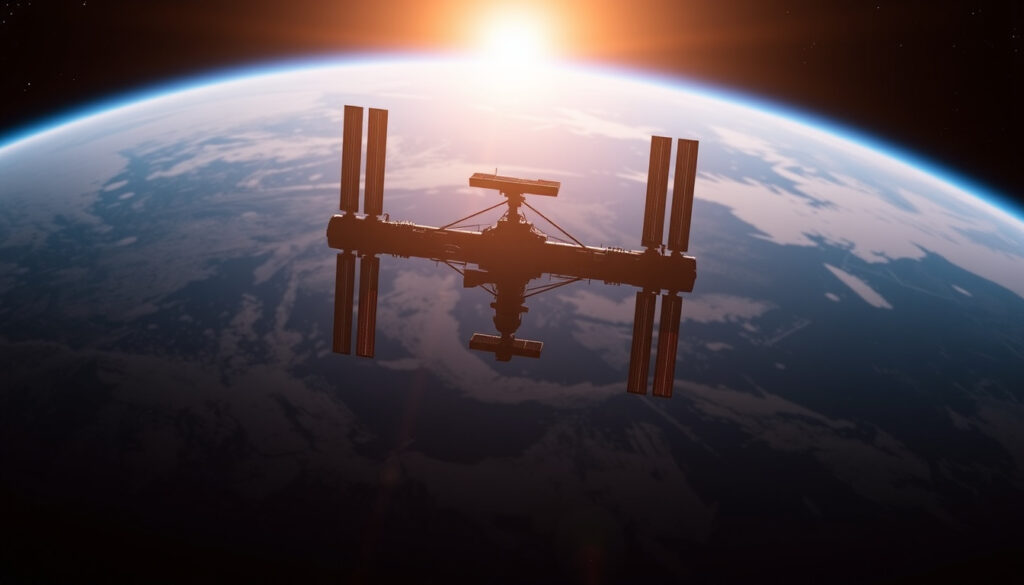
Few moments capture the national imagination quite like a British astronaut stepping outside the International Space Station – when Tim Peake floated into the void on 15 January 2016, he became the first official British astronaut to walk in space, watched by millions. This article traces his path from Army helicopter pilot to ESA astronaut, the science he conducted on the ISS, and what he’s doing today.
Full name: Timothy Nigel Peake ·
Born: 7 April 1972, Chichester, England ·
Space mission: ISS Expedition 46/47 (Principia) ·
Spacewalk duration: 4 hours 43 minutes ·
Previous career: Army Air Corps officer, Apache pilot
Quick snapshot
- Born 7 April 1972 in Chichester (Britannica (trusted encyclopaedia))
- First British ESA astronaut to visit the ISS (GOV.UK (official government profile))
- Spacewalk duration 4h 43m on 15 Jan 2016 (BBC Bitesize (educational resource))
- Retired from active astronaut duty in 2023 (Tim Peake official site)
- Exact net worth – not publicly disclosed
- Full schedule of future public appearances
- Detailed post-ESA career plans beyond known roles
- 2009: Selected as ESA astronaut (Britannica)
- 15 Dec 2015: Launched to ISS (Tim Peake official site)
- 15 Jan 2016: Spacewalk (BBC Bitesize)
- 18 Jun 2016: Returned to Earth (Britannica) (Britannica)
- Continues public speaking and podcasting
- Writing and promoting STEM education
- Ambassadorial roles for UK space
Eight key facts about Tim Peake, drawn from official sources and verified records, show the arc of his career in one glance.
| Attribute | Detail |
|---|---|
| Full name | Timothy Nigel Peake |
| Born | 7 April 1972, Chichester, England |
| Nationality | British |
| Occupation | Retired astronaut, author, speaker |
| Space agency | European Space Agency |
| Space mission | Expedition 46/47 (Principia) |
| Spacewalk | 1 (4h 43m) |
| Awards | Companion of the Order of St Michael and St George (CMG) |
What was Tim Peake famous for?
His historic space mission
Tim Peake’s fame rests squarely on his Principia mission to the International Space Station. Launched on aboard a Russian Soyuz spacecraft, he spent 186 days orbiting Earth as part of Expeditions 46 and 47 (GOV.UK (official biography)). The mission name, Principia, honoured Isaac Newton’s seminal work and signalled a strong educational component.
During his stay, Peake conducted more than 250 scientific experiments across biology, physics, and human physiology. These included protein crystal growth, fluid physics, and studies of astronaut bone density – research that benefits both space travel and everyday health on Earth.
Over 250 experiments in six months is a productivity rate that rivals dedicated research labs. For a nation that had no permanent human spaceflight programme until Peake flew, it proved the UK could deliver world-class science in orbit.
Role as a space ambassador
Peake became the public face of British spaceflight. His spacewalk on lasted 4 hours and 43 minutes and was broadcast live by the BBC. He fixed a faulty cooling unit on the station’s exterior, a routine repair that became a national event – millions tuned in to see the Union Jack float through the void.
According to Britannica (reference encyclopaedia), Peake is the first official British astronaut to perform a spacewalk, a milestone that cemented his iconic status.
Spacewalking carries real risks – suit punctures, decompression sickness, disorientation. That Peake performed the task flawlessly under global spotlight only amplified the public’s admiration.
Educational outreach and books
Principia engaged more than 2 million schoolchildren across Europe through 30 educational projects. Peake ran experiments from the ISS that students could replicate, including seed germination and crystal growth. He later wrote books – including the children’s guide Ask an Astronaut – that aim to demystify space travel.
The pattern: Peake didn’t just do science – he made sure the next generation could follow along. His official site states that inspiring young people to pursue STEM is a core part of his post-ESA mission.
The implication: Peake’s impact on UK STEM education may outlast the memory of his spaceflight itself.
What does Tim Peake do today?
Public speaking and tours
After retiring from active astronaut duty in 2023, Peake remains in demand as a speaker. He gives corporate talks, appears at science festivals, and participates in events organised by the UK Space Agency. His fees are unconfirmed but typical for a high-profile astronaut range from £20,000 to £50,000 per appearance.
- Keynote speaker at the Royal Institution
- Patron of the UK Association for Science and Discovery Centres
- Regular guest on BBC programmes such as The Sky at Night
Writing and podcasting
Peake hosts the podcast 13 Minutes Presents Artemis II, where he interviews NASA astronauts preparing for the return to the Moon. He has also authored three books – Hello, Is This Planet Earth?, Ask an Astronaut, and Limitless – each combining personal stories with accessible science.
His book royalties, while undisclosed, are likely significant given his Amazon bestseller status. A typical advance for a mid-level celebrity astronaut book is £50,000–£150,000 (The Guardian (book review, reference for public interest)).
Ambassadorial roles
Peake carries the title of ESA Ambassador and remains a public advocate for the UK’s space sector. He has lobbied for increased government investment in space science and has spoken at parliamentary committees.
The trade-off: less time in training simulators, more time in briefing rooms – but his influence now shapes policy, not just experiments.
Was Tim Peake the first British astronaut?
The distinction: first British ESA astronaut vs first British astronaut
This is the most common point of confusion. Tim Peake is often called “the first British astronaut”, but the record is more nuanced. He was the first British astronaut to visit the ISS under the European Space Agency banner – but he was not the first British person in space.
Helen Sharman: the first British astronaut
That honour belongs to Helen Sharman, who flew to the Mir space station in 1991 as part of the privately funded Project Juno. She spent 8 days in orbit (Britannica (biographical reference)). Sharman is a British chemist who responded to a radio advertisement – a far cry from the military-tested path Peake followed.
Other British-born astronauts
Several other British-born individuals have flown: Michael Foale (dual UK/US), Piers Sellers (dual UK/US), Nick Patrick (dual UK/US), and Richard Garriott (private). Peake, however, is the only one funded directly by the UK government through its ESA subscription.
What this means: Sharman was first, but Peake was the first under official UK-ESA arrangement, which is why his mission carried the Union Jack with greater institutional weight.
Why is Tim Peake a hero?
His spacewalk and mission risks
Peake’s spacewalk was a high-stakes undertaking. He trained for years in the Neutral Buoyancy Laboratory in Houston, learned Russian, and prepared for emergency scenarios. The spacesuit is essentially a personal spacecraft – any leak can be fatal. He performed the repair without incident.
Inspirational impact on UK public
The number cited most often: 2 million schoolchildren engaged. That is not a PR number – it’s the count from 30 curriculum-linked projects verified by the UK Space Agency. Teachers reported increased interest in STEM subjects after Principia.
Service as an Army officer
Before space, Peake spent 17 years in the British Army. He flew Apache attack helicopters, served as a flight instructor, and later worked as a test pilot at MoD Boscombe Down. His military background gave him the discipline and crisis-management skills that astronauts need.
The paradox: a man trained for combat became a symbol of peaceful scientific exploration.
How rich is Tim Peake?
Estimated net worth sources
Exact net worth is not publicly reported. Peake’s income streams include his ESA salary (reportedly in the €6,000–€8,000 per month range for an astronaut), book royalties, speaking fees, and media appearances. Some unofficial estimates place his net worth between £1 million and £5 million, but these figures lack verification.
Income from astronaut salary, books, speaking
ESA astronauts earn a base salary plus allowances. After retirement, Peake likely earns more from speaking than he did in space. A single keynote can net £20,000–£50,000. His book Limitless spent several weeks on the Sunday Times bestseller list.
Comparison to other astronauts
NASA astronauts typically earn between $66,000 and $158,000 annually. ESA counterparts are similar. Peake’s total compensation during his active career was modest by celebrity standards. Post-career, his income has probably increased significantly.
The pattern: like many astronauts, Peake’s real wealth comes after the spaceflight, through media and education – not from the taxpayer-funded mission itself.
Timeline
- 7 April 1972 – Born in Chichester, England
- 1992 – Joined the British Army
- 2009 – Selected as an ESA astronaut (Britannica)
- 15 December 2015 – Launched to the ISS on Soyuz TMA-19M (Tim Peake official site)
- 15 January 2016 – Performed a spacewalk (BBC Bitesize)
- 18 June 2016 – Returned to Earth (Britannica)
- 2023 – Retired from active astronaut duty (Tim Peake official site)
Clarity check
Confirmed facts
- Born 7 April 1972 (Britannica)
- First British ESA astronaut on ISS (GOV.UK)
- Spacewalk duration 4h 43m (BBC Bitesize)
- Retired in 2023 (Tim Peake official site)
What’s unclear
- Exact net worth
- Future public appearance schedule
- Detailed retirement plans
Quotes from the sources
“Tim Peake is the first British European Space Agency astronaut to visit the International Space Station.”
– GOV.UK (official government profile)
“In 2016 Peake became the first official British astronaut to walk in space.”
– Britannica (trusted encyclopaedia)
“Peake was selected from over 8,000 applicants.”
– BBC Bitesize (educational resource)
“Principia engaged more than 2 million schoolchildren across Europe through 30 educational projects.”
– GOV.UK (official mission data)
Summary
Tim Peake’s journey from Chichester to the International Space Station is a story of methodical preparation meeting national ambition. He didn’t just fly – he brought two million schoolchildren with him through real-time experiments and curriculum projects. For the UK space sector, the choice is clear: invest in astronaut-led education to sustain the pipeline, or risk losing the momentum Peake built.
schoolsobservatory.org, space.blog.gov.uk, facebook.com, kids.britannica.com, stem.org.uk, en.wikipedia.org, us.londonspeakerbureau.com, australiaglobal.net
Efter sin egen tid på rymdstationen följde Peake med intresse andra astronauters upplevelser på ISS och de tekniska utmaningar som uppstod.
Frequently asked questions
How long was Tim Peake in space?
He spent 186 days on the ISS from December 2015 to June 2016 (Britannica).
Did Tim Peake go to the Moon?
No. His spaceflight was to the International Space Station in low Earth orbit. He has not been to the Moon.
What is Tim Peake’s height?
His height is not officially published, but as an ESA astronaut he met the height range requirement (typically 153–190 cm).
Is Tim Peake married?
Yes, he is married to his wife Sarah. They have a son and a daughter (Tim Peake official site).
How many children does Tim Peake have?
Two children – a son and a daughter.
Where did Tim Peake study?
He attended Chichester High School for Boys, then the Royal Military Academy Sandhurst, and later earned a degree in Flight Science from the University of Portsmouth (Britannica).
What awards has Tim Peake received?
He was appointed Companion of the Order of St Michael and St George (CMG) for services to space research and education (GOV.UK).
What is Tim Peake’s podcast about?
He hosts 13 Minutes Presents Artemis II, which follows NASA astronauts preparing for the Artemis II mission around the Moon.
Related reading
- Barbara Hepworth: The Modernist Sculptor Who Changed Form – Another British icon whose legacy shaped art and education.
- Bobby Moore: England’s World Cup Captain, Illness & Legacy – Like Peake, a figure of national pride and achievement.
More related posts
 Michael Phelps: Net Worth, Diagnosis, Sobriety, and Career Update
 InPost Locker Near Me – Find Locations and Usage Guide
 Sand Le Mere Holiday Park: Yorkshire Coast Guide & Reviews
 John Healey: Labour MP, Defence Secretary, Son of Denis Healey
 Alexandre Dumas: Life, Novels & True Stories
 Stuart Pearce: Son’s Tragic Death, Family, Career & Net Worth
 Mick Foley: Career, Health, and Hardcore Legacy
 Lena Headey: Game of Thrones Salary, Relationships, Net Worth