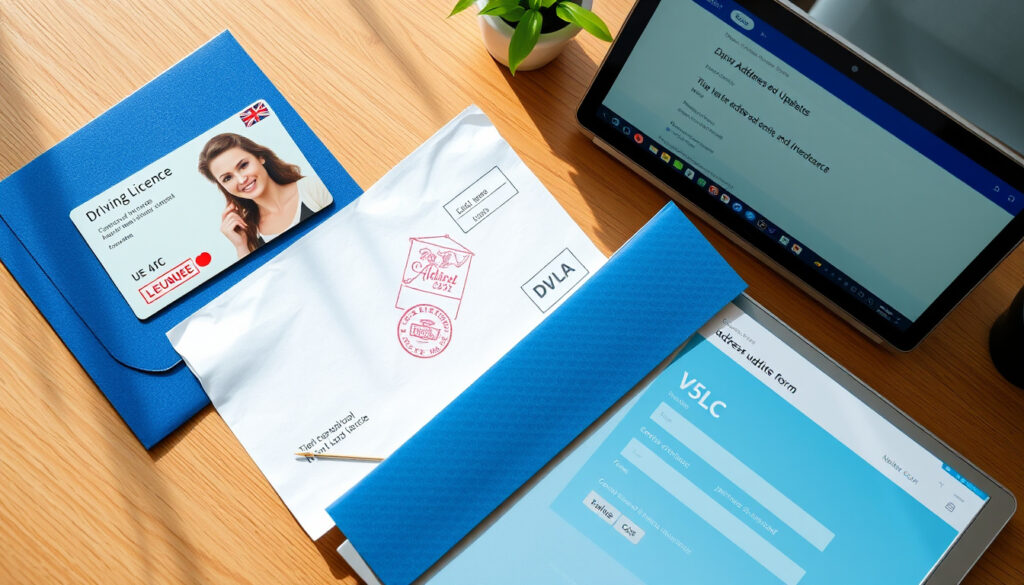
DVLA Change of Address – How to Update Licence and V5C
Updating your address with the DVLA is a legal requirement whenever you move house permanently. The process covers both your driving licence and vehicle log book (V5C), and can be completed online or by post at no cost. Understanding the requirements helps you avoid potential fines and ensures your vehicle records remain accurate.
Whether you hold a photocard licence or an older paper licence, the DVLA provides clear pathways to update your details. The key is acting promptly—official guidance recommends notifying them of a permanent change as soon as possible to maintain valid records on the road.
This guide walks through every step of the process, from online applications to postal submissions, while clarifying what happens if you delay or encounter complications along the way.
How do I change my address with DVLA?
The DVLA offers two primary methods for updating your address: an online service for photocard licences and vehicle log books, and a postal route for those with paper licences or specific circumstances. Both routes are free, though they differ in processing speed and documentation requirements.
Updating your driving licence address online
The online service at GOV.UK handles address changes for full or provisional photocard licences. It does not cover name changes, which must be processed by post. To apply, you will need your driving licence number, National Insurance number, and passport details if available.
You will also need to provide addresses from the last three years, your date of birth, gender, and country of birth. Once submitted, a confirmation email arrives promptly, and your new licence typically reaches you within seven working days.
This online route applies only to modern photocard licences. If you hold an older paper licence, you cannot use the digital service and must upgrade to a photocard through the postal process instead.
Updating your vehicle log book (V5C) online
The vehicle log book service operates Monday to Friday from 7am to 9pm, with reduced hours at weekends. You must be the registered keeper of the vehicle to use this service.
Required information includes your vehicle registration number, V5C reference number, current postcode, and your new UK address. PO boxes are not accepted. The system updates your records in real time, with a confirmation email sent if you provide contact details. Your new V5C document arrives within five working days.
If vehicle tax is due within the next four weeks, you should tax the vehicle first either online or at a Post Office with your MOT certificate before submitting the address change.
Posting your address change
For driving licences, complete the D1 form and send it to DVLA, Swansea, SA99 1BN. Include your old licence and a passport photo if you are upgrading from a paper licence to a photocard. The form requires details of past addresses, eyesight conditions, and other relevant information.
For vehicle log books, locate section 3 on the new-style V5C (characterised by multi-coloured blocks), write your new address there, and post the entire document to the DVLA address indicated in that section. If road tax is due soon, sort that before posting.
Both postal routes carry no fee, though processing takes longer than their online equivalents. There is no need to rush to a DVLA office in person—these transactions are handled entirely by mail.
If you still hold a paper driving licence, you must upgrade to a photocard via the D1 postal route. This involves sending your existing licence, a completed D1 form, a passport photo, and proof of identity such as your passport.
- Treat your old licence as valid until your new one arrives—you can legally drive during the waiting period
- Keep your old V5C until the replacement arrives to avoid any gaps in your vehicle records
- Update your vehicle tax Direct Debit separately if you pay by this method
- Name changes require postal applications regardless of licence type
- Northern Ireland residents must use a separate process through NI Direct
| Document | Online option | Postal option | Processing time |
|---|---|---|---|
| Photocard driving licence | Via GOV.UK | D1 form | 7 working days |
| Paper driving licence | Not available | D1 form with upgrade | 7+ working days |
| Vehicle log book (V5C) | Via GOV.UK | Post with new address in section 3 | 5 working days |
| Vehicle tax Direct Debit | Via GOV.UK or Post Office | N/A | Varies |
Do I need to tell DVLA if I move house?
Yes, notifying the DVLA of a permanent address change is a legal obligation for all UK licence holders and registered vehicle keepers. This requirement applies whether you own a car or simply hold a driving licence—the DVLA must have your current address on file at all times.
Temporary moves, such as staying at university or a short-term rental, do not usually trigger this obligation. However, any permanent relocation means your records must reflect your new address within a reasonable timeframe.
What documents need updating?
Two primary documents require attention when you move: your driving licence and your vehicle log book (V5C). If you pay vehicle tax by Direct Debit, that arrangement also needs updating with your new details.
Personalised registration documents, such as the V750 (retention certificate) or V778 (confirmation of registration), should also reflect your current address. Each of these can be updated through the relevant DVLA channels.
Why does the DVLA need my current address?
The DVLA uses your recorded address for critical road safety and administrative purposes. These records help locate drivers if their vehicle is involved in an incident, ensure road tax assessments reflect the correct local authority area, and support enforcement actions when needed.
Insurance validity can also be affected indirectly. While the DVLA does not share your address with insurers directly, mismatched records between your policy and DVLA files could create complications during claims processing.
How long does DVLA take to change address?
Processing times differ depending on the document and method chosen. Online applications consistently process faster than postal submissions, though both routes remain relatively quick compared to many other administrative processes.
Driving licence address changes take approximately seven working days from submission. Vehicle log book updates arrive within five working days via the online service. Postal applications for either document typically add several days to these estimates due to delivery and handling times.
Can you drive while waiting for your new licence?
Yes, you can legally continue driving both provisional and full licence holders during the processing period. Your old licence remains valid until the replacement arrives, and there is no requirement to stop driving while awaiting your updated document.
This provision applies even if you have submitted your old licence by post. Simply keep the licence safe and avoid driving without it—this is separate from the question of whether it remains legally valid during the transition.
How to track your application
The DVLA does not provide a public online tracking system for address change applications. Instead, you receive a confirmation email when your online submission is received, and then await delivery by post.
Check your email inbox for the confirmation message and its estimated delivery date. If your new document has not arrived within the expected window, contact the DVLA directly through their official channels to investigate.
Is it free to change address with DVLA?
Address changes on both driving licences and vehicle log books are free, whether submitted online or by post. This applies to the address update itself—your existing licence or V5C document is not replaced unless you choose to apply for a duplicate.
Certain related services do carry fees. Upgrading from a paper licence to a photocard incurs a charge. Similarly, requesting a replacement V5C if yours is lost or damaged involves a small fee. Pure address updates on existing documents remain free of charge. For more details on updating your address, you can visit the DVLA website at irelandinsight.net.
What if you have lost your driving licence?
If your licence is lost, you cannot simultaneously request an address change and a replacement through the same channel. The address change process assumes you have your existing licence to update. A lost licence requires a separate replacement application first.
Report the loss through GOV.UK and apply for a replacement. Once your new licence arrives, you can then submit an address change if needed. This two-step approach ensures both issues are resolved correctly.
Whether updating your licence or V5C, hold onto your old documents until the new ones arrive. Sending them in before receiving the replacement can leave you without valid documentation, which creates practical and legal complications.
What is the penalty for not updating DVLA address?
Failing to notify the DVLA of a permanent address change carries a potential fine of up to £1,000. This penalty applies specifically when you move permanently and do not update your records within a reasonable period.
The requirement covers both your driving licence and your vehicle registration. Beyond the financial penalty, driving with incorrect documentation creates additional risks and complications, particularly if you are involved in any road incident.
Does changing address affect car insurance?
Official sources do not specify that an address change alone invalidates your insurance policy. However, your insurer must be told of your new address as a matter of course—they use this information for risk assessment and premium calculations.
A mismatch between the address on your DVLA records and the address on your insurance policy could create difficulties when processing a claim. While the DVLA does not actively share data with insurers, discrepancies in your documentation may raise questions during investigation of an incident.
Important details for Northern Ireland residents
Northern Ireland operates its own driver and vehicle licensing system, separate from the DVLA covering England, Scotland, and Wales. Residents of Northern Ireland cannot use the GOV.UK online services described above and must instead apply through NI Direct.
The NI Direct website provides the relevant forms and guidance for address changes on driving licences and vehicle registration documents. Processes and fees may differ from those on the British mainland, so Northern Ireland residents should verify requirements through their dedicated government portal.
What is established versus unclear in the process?
| Established information | Unclear or variable |
|---|---|
| Address changes are free for licences and V5Cs | Exact regional processing variations between England, Scotland, and Wales |
| Online services available for photocard licences and V5Cs | Specific timeline adjustments during peak periods |
| New licence arrives within 7 working days | Availability of in-person DVLA services for queries |
| New V5C arrives within 5 working days | Standard processing times for Northern Ireland applications |
| You can drive legally during processing | Full details of replacement fees if original documents are lost |
| Maximum fine for non-compliance is £1,000 | Whether temporary address changes need formal notification |
Why keeping your address current matters
The DVLA requirement to update your address stems from road safety obligations and administrative necessity. Accurate records allow authorities to contact drivers when necessary, assess vehicle excise duties correctly, and support enforcement activities ranging from unpaid road tax to accident investigations.
From a practical standpoint, keeping your records current prevents friction when you need to interact with the DVLA for other purposes—renewing your licence, taxing your vehicle, or selling your car all go more smoothly when your address details are accurate.
The process itself has been streamlined significantly in recent years, with the DVLA launching dedicated online services to reduce friction for residents. These digital tools complement traditional postal routes, giving you flexibility in how you complete your notification.
Official sources and guidance
The DVLA advises that you must tell them about a change of name or address for your driving licence or vehicle registration. This is a legal requirement, and failure to notify can result in a fine of up to £1,000.
— GOV.UK
The online service for changing your address on your vehicle log book updates your record in real time, with a new V5C sent to you within 5 working days.
— DVLA Digital Blog
The primary authoritative sources for this process are the official GOV.UK pages covering driving licence address changes and vehicle log book updates. These pages contain the most current guidance and should be your first reference point for any queries about your specific situation.
Summary
Updating your address with the DVLA is straightforward and free for both driving licences and vehicle log books. Online services handle photocard licences within seven working days and V5C documents within five working days. Postal alternatives exist for paper licences and those preferring traditional methods. The legal obligation carries potential fines of up to £1,000 for non-compliance, making prompt notification essential whenever you move permanently. You can continue driving during the processing period, and keeping your old documents until replacements arrive is recommended.
For those exploring vehicle options after settling into a new home, Motability cars available immediately offers practical guidance on accessible vehicles, while Land Rover Defender for sale provides information on another popular vehicle choice for those upgrading after a house move.
Frequently asked questions
Can I change my DVLA address if I live in Northern Ireland?
No. Northern Ireland has a separate licensing system. You must use NI Direct services rather than the GOV.UK/DVLA channels available to residents of England, Scotland, and Wales.
How can I track my DVLA address change application?
There is no public online tracker for address changes. You receive a confirmation email when you apply online, and then await delivery by post within the standard processing window.
Do I need to update my vehicle tax Direct Debit separately?
Yes. The tax Direct Debit arrangement is separate from your V5C address change. Visit GOV.UK or your bank to update the payment details linked to your vehicle tax.
What happens if I lose my licence while waiting for an address change?
Apply for a replacement licence first, then submit your address change once the new licence arrives. These processes should be handled sequentially to avoid complications.
Can I use the online service for a name change as well as an address change?
No. Name changes require postal applications and cannot be processed through the online address change service, even if you hold a photocard licence.
Is there a deadline for notifying the DVLA after moving?
While official guidance does not specify an exact number of days, it recommends notifying as soon as possible after a permanent move. Prolonged delays increase your risk of the £1,000 fine.
What should I do if my new documents do not arrive within the expected time?
Contact the DVLA directly through their official contact channels if your documents have not arrived within the stated processing window plus reasonable delivery time.
More related posts
 Healthy Paneer Tikka Ma ala Near Me: Calorie , Nutrition & Tip
 Vinícius Júnior: Confirmed Facts, Rumors, and Personal Life
 Rhona Mitra: What Happened? Disease, Partner, Net Worth
 Mark Wright: TOWIE Star, Net Worth, Wife, and Family
 Jamie Sives: Biography, Pronunciation, and Key Roles
 Rachel Weisz: Age, Ethnicity, Husband, Children, Movies
 Kolkata Knight Riders vs Mumbai Indians Match Scorecard IPL 2026
 Man United vs Fulham 3-2: Sesko’s Late Winner