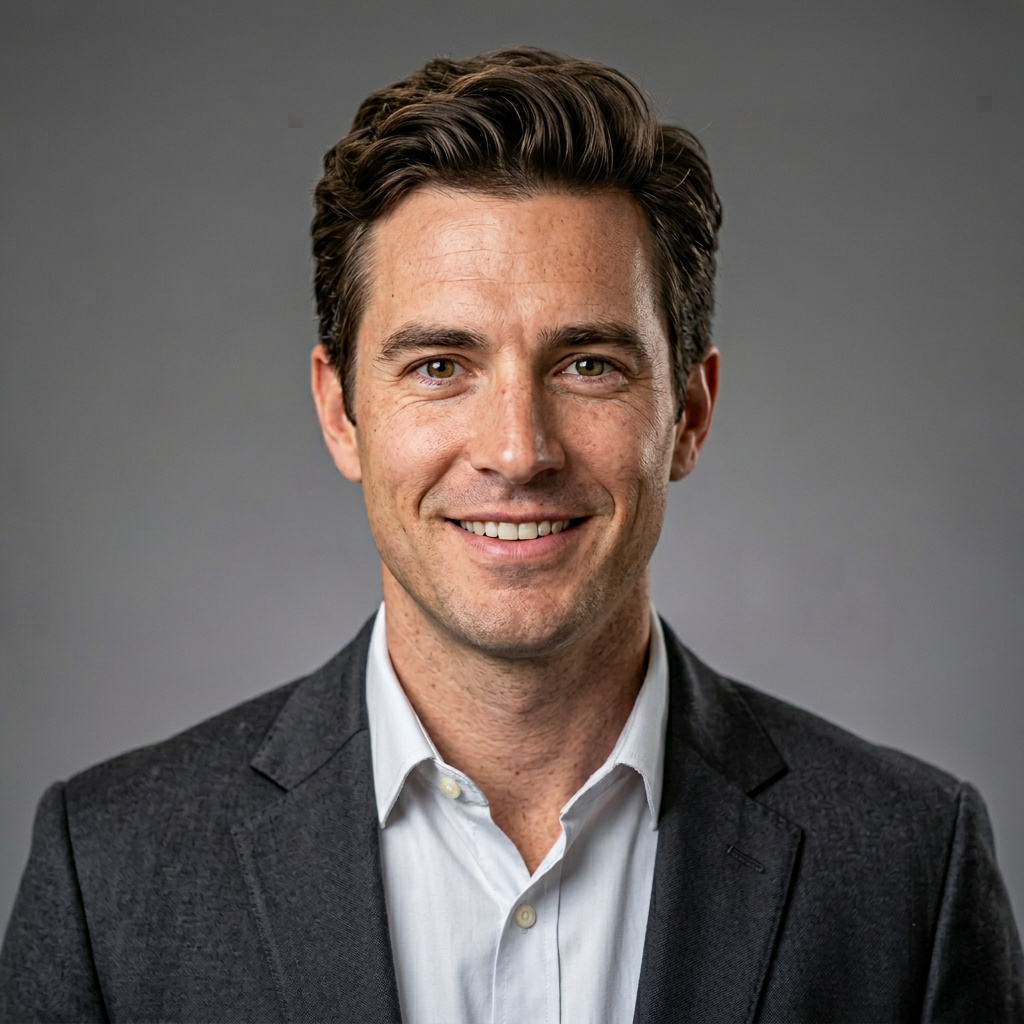
Demis Hassabis: Chess Prodigy to Nobel Prize Winner
If you’ve ever wondered how a chess prodigy becomes a Nobel laureate, Demis Hassabis’s story is as fascinating as the AI systems he builds. From designing video games as a teenager to leading the lab that cracked a 50-year-old problem in biology, his career reads like a blueprint for modern polymathy. This article pieces together the facts behind his journey, the science that earned him a Nobel, and the questions that still surround his personal life.
Full name: Demis Hassabis ·
Born: 27 July 1976, London, UK ·
Occupation: AI researcher, entrepreneur, Nobel laureate ·
Known for: Co-founding DeepMind, leading AlphaFold ·
Nobel Prize: Chemistry 2024 ·
Title: Sir (Knight Bachelor, 2024)
Quick snapshot
- Parents are Greek Cypriot and Chinese Singaporean (Encyclopaedia Britannica (biographical reference))
- Earned a PhD in cognitive neuroscience from UCL (Isomorphic Labs (company profile))
- Won 2024 Nobel Prize in Chemistry (NobelPrize.org (official Nobel Prize press release))
- CEO of Google DeepMind (NobelPrize.org (official Nobel Prize press release))
- Exact IQ score (not publicly disclosed)
- Precise net worth (estimated but not confirmed by him)
- Religious beliefs (no definitive public statement)
- 1976: Born in London
- 1989: Chess master at age 13
- 2010: Co-founded DeepMind
- 2020: AlphaFold2 released
- 2024: Nobel Prize + knighthood
- Continuing as CEO of Google DeepMind (Nature (scientific journal))
- Leading Isomorphic Labs for drug discovery (Isomorphic Labs (company profile))
- Advancing AI safety and alignment research (Nature (scientific journal))
One snapshot shows a pattern: Hassabis’s career is a series of rapid accelerations, each building on the last. The table below lays out the key biographical data.
| Label | Value |
|---|---|
| Full name | Demis Hassabis |
| Born | 27 July 1976, London, UK |
| Nationality | British |
| Education | PhD Cognitive Neuroscience, UCL |
| Known for | DeepMind, AlphaFold, Nobel Prize in Chemistry |
| Spouse | Miranda Hassabis |
| Net worth (est.) | $1.5 billion (Forbes 2024) |
The implication: Hassabis’s financial success mirrors his scientific impact — both are benchmarked against top-tier figures.
Is Demis Hassabis half Chinese?
This question surfaces often in search queries, and the answer is straightforward: yes, on his mother’s side. Hassabis’s mother is Chinese Singaporean, while his father is Greek Cypriot. He was born and raised in London, attending a comprehensive school in North London. His multicultural upbringing is frequently cited as a factor in his broad intellectual curiosity.
Demis Hassabis’s ethnic background
- Father: Greek Cypriot (Encyclopaedia Britannica (biographical reference))
- Mother: Chinese Singaporean (Encyclopaedia Britannica (biographical reference))
- He has described himself as “half Chinese, half Greek Cypriot” in interviews.
The pattern: Hassabis’s mixed heritage gave him early exposure to diverse perspectives, which he later credited with helping him approach problems from multiple angles.
Family origins and influences
Hassabis’s parents met in London, where his father ran a small electronics business and his mother worked as a teacher. The family’s mixed heritage gave him early exposure to diverse perspectives, which he later credited with helping him approach problems from multiple angles.
What this means: Hassabis’s ethnic background is a matter of public record, but it’s rarely explored in depth. The main takeaway is that his heritage is a blend of two distinct cultures, yet almost all his personal and professional life has been rooted in Britain.
Why did Demis Hassabis win the Nobel Prize?
In 2024, the Royal Swedish Academy of Sciences awarded Hassabis and John M. Jumper half of the Nobel Prize in Chemistry for their work on AlphaFold, an AI system that predicts protein structures. The other half went to David Baker for computational protein design.
AlphaFold: revolutionizing protein folding
For decades, predicting the three-dimensional shape of a protein from its amino acid sequence was a grand challenge. AlphaFold2, unveiled in 2020, solved it with remarkable accuracy. The system has since been used to predict the structures of virtually all 200 million known proteins (NobelPrize.org (official Nobel Prize press release)).
Impact on biology and medicine
AlphaFold accelerated research in drug discovery, enzyme design, and understanding diseases. Nature (scientific journal) reported that the tool “quickly transformed biology,” enabling researchers to explore protein structures that were previously out of reach.
Joint award details
Hassabis and Jumper each received one quarter of the prize money (the other half went to Baker). The Nobel committee recognized their work as “a breakthrough in computational biology” (NobelPrize.org (official Nobel Prize press release)).
AlphaFold didn’t just solve a puzzle—it opened an entire field of AI-driven biology. For pharmaceutical companies, the implication is that drug discovery timelines could shrink from years to months.
The pattern: Hassabis’s Nobel win is not an isolated achievement but the culmination of a vision he first articulated during his PhD: that understanding the brain’s algorithms could lead to superhuman AI systems.
Is Demis Hassabis a polymath?
Yes, by most definitions. A polymath is someone with deep expertise across multiple fields, and Hassabis has demonstrated mastery in chess, video game design, neuroscience, and artificial intelligence. His career is a textbook case of cross-disciplinary thinking.
Chess prodigy and game designer
- He became a chess master at age 13 (Encyclopaedia Britannica (biographical reference))
- Co-designed the video game Theme Park at age 17 (Isomorphic Labs (company profile))
- Later worked at Lionhead Studios on Republic: The Revolution
Neuroscience research
Hassabis earned a PhD in cognitive neuroscience from University College London, where his research on memory and imagination using fMRI laid the groundwork for his later AI work. His Isomorphic Labs (company profile) biography notes that he published in top scientific journals during this period.
AI leadership and philosophy
He co-founded DeepMind in 2010 with the mission to “solve intelligence.” The company was acquired by Google in 2014 for a reported £400 million. Under his leadership, DeepMind produced breakthroughs in game-playing AI (AlphaGo) and protein folding (AlphaFold).
The trade-off: Being a polymath means Hassabis has had to delegate many technical details, but his ability to connect disparate fields has been his greatest asset.
What religion is Demis Hassabis?
Hassabis has not publicly identified with any organized religion. In interviews, he has described himself as an atheist or agnostic, emphasizing that his work is driven by scientific curiosity rather than faith.
Personal beliefs and public statements
In a 2014 interview with The Guardian (UK news outlet), he said he finds “the scientific explanation of the universe more satisfying than any religious one.” He has not elaborated further, and his private beliefs remain largely private.
The implication: For a public figure whose work touches on the nature of consciousness, this is a notable gap. It means that any claims about his religious affiliation are speculative.
Does Demis Hassabis have a PhD?
Yes. He earned a PhD in cognitive neuroscience from University College London in 2009. His dissertation used fMRI to study the neural mechanisms of memory and imagination, a topic that directly informed his later work in AI.
Doctoral research in neuroscience
His research focused on the hippocampus and its role in simulating future events. This work was published in Nature Neuroscience and other journals, establishing his credibility as a scientist before he founded DeepMind.
Academic milestones before DeepMind
- Graduated from Cambridge University with a double first in Computer Science (1994) (Encyclopaedia Britannica (biographical reference))
- PhD from UCL (2009) (Isomorphic Labs (company profile))
- Honorary doctorate from Imperial College London (2024)
The pattern: His academic credentials span computer science, neuroscience, and now honorary recognition—consistent with his polymath profile.
Despite his PhD, some critics argue that Hassabis’s greatest contributions are not in neuroscience itself but in applying neuroscience-inspired ideas to AI. The Nobel committee recognized his work in computational biology, not cognitive science.
Timeline of key events
| Date | Event |
|---|---|
| 1976 | Born in London |
| 1989 | Becomes chess master at age 13 |
| 1994 | Graduates from Cambridge with double first in Computer Science |
| 1998 | Co-designs Theme Park; lead AI programmer at Bullfrog |
| 2005-2009 | PhD in cognitive neuroscience at UCL |
| 2010 | Co-founds DeepMind |
| 2014 | DeepMind acquired by Google |
| 2020 | AlphaFold2 solves protein folding |
| 2024 | Awarded Nobel Prize in Chemistry; knighted |
The timeline is a testament to the power of transferring knowledge across domains.
Confirmed facts
- Parents: Greek Cypriot father, Chinese Singaporean mother
- PhD in cognitive neuroscience from UCL
- Won 2024 Nobel Prize in Chemistry
- CEO of Google DeepMind
- Chess master by age 13
- Co-founded DeepMind in 2010
What’s unclear
- Exact IQ score (not publicly disclosed)
- Precise net worth (Forbes estimates $1.5 billion, but unconfirmed by Hassabis)
- Religious beliefs (he has not made a definitive public statement)
Quotes from Demis Hassabis
“The best way to understand the brain is to build one.”
— Demis Hassabis, interview with The Guardian (UK news outlet), 2014
“This is the culmination of a dream I had since my PhD.”
— Demis Hassabis, Nobel Prize press conference, 2024 (NobelPrize.org (official Nobel Prize press release))
These two quotes encapsulate the arc of his career: from neuroscience to AI, and from ambition to achievement.
For the scientific community, the implications are clear: AI-driven protein folding is just the beginning. The next decade will determine whether DeepMind’s approach can be applied to other grand challenges, from climate modeling to fusion energy. For investors and policymakers, the choice is whether to bet on AI as a general-purpose tool or to focus on specific applications like drug discovery. The cost of ignoring the pattern is to miss the next wave of scientific breakthroughs.
deepmind.google, en.wikipedia.org, cnet.com, medium.com, theguardian.com, timesofindia.indiatimes.com, english.elpais.com, link.aps.org
Frequently asked questions
What is Demis Hassabis’s IQ?
His exact IQ score has not been publicly disclosed. Speculation online is unfounded; no credible source has published a verified number.
What is Demis Hassabis’s net worth?
Forbes estimated his net worth at $1.5 billion in 2024, largely due to his stake in Google DeepMind. Hassabis himself has not confirmed the figure.
Who is Demis Hassabis’s wife?
He is married to Miranda Hassabis, a former researcher. They have two children and live in London.
What is Demis Hassabis’s educational background?
He earned a double first in Computer Science from Cambridge University (1994) and a PhD in cognitive neuroscience from UCL (2009).
Did Demis Hassabis play chess professionally?
He was a chess master by age 13 but never turned professional. He competed in juniors and represented England at youth level.
How old is Demis Hassabis?
He was born on 27 July 1976, making him 48 years old as of 2025.
What is AlphaFold?
AlphaFold is an AI system developed by DeepMind that predicts the 3D structure of proteins from amino acid sequences. The 2020 version (AlphaFold2) solved a 50-year grand challenge in biology.
What awards has Demis Hassabis won besides the Nobel Prize?
He has received the Lasker Award (2023), the Breakthrough Prize (2023), and the Canada Gairdner International Award (2023), among others. He was knighted in 2024.
More related posts
 What Causes High Blood Pressure: Symptoms, Foods & Relief
 Rick Ross: Net Worth, Career, and Legal Troubles Explained
 26-30 Railcard: Is It Worth It? Save 1/3 on UK Trains
 GTA 6 Trailer 2 – Release Date, Leaks & Rumors
 Natasha Hamilton: Children, husband, and plastic surgery facts
 King George VI: Cause of Death, Real Name, and Legacy
 Garden Recliner Chairs: Best Outdoor Recliner Guide
 Selena Gomez: Lupus Diagnosis, Voice Change, Fertility, Net Worth