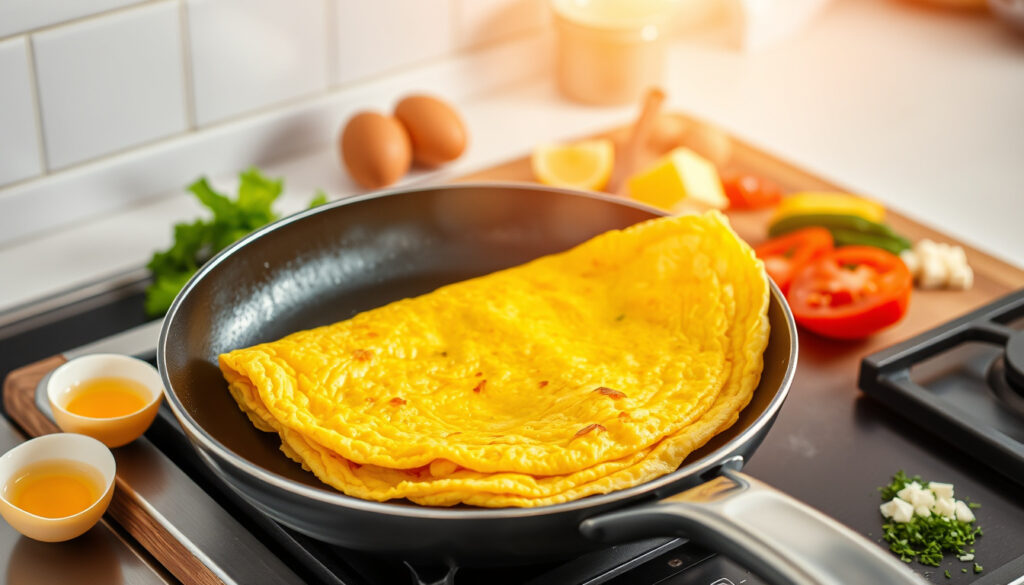
How to Make an Omelette: Simple Step-by-Step Guide
Few kitchen skills pay off as quickly as the perfect omelette. Once you’ve got the technique down—a bit of wrist, a little patience, and the right temperature—you’ll have a dish that works for breakfast, lunch, or a quick weeknight dinner. Below, you’ll find step-by-step instructions from BBC Good Food and Jamie Oliver, plus the pro tips that make the difference between a dry scramble and a silky, golden fold.
Typical eggs per omelette: 2-3 · Cook time: 5 minutes · Key ingredient: Butter · Standard servings: 1 · Heat level: Medium
Quick snapshot
- 2 large eggs per serving is the standard (BBC Good Food)
- A knob of butter coats the pan without excess fat (BBC Good Food)
- Milk or cream quantities vary by preference (Jamie Oliver)
- Precise browning color depends on individual pan and stove (Jamie Oliver)
- The classic 2-egg method has been taught since the 2000s by Delia Smith and Jamie Oliver alike (BBC Good Food)
- La Mère Poulard made the butter-and-egg omelette famous in France starting in 1888 (BBC Good Food)
- Practice the basic fold once, then experiment with fillings like cheese, ham, or mushrooms (BBC Good Food)
- Progress to open-faced omelettes finished under the grill for restaurant-style results (Jamie Oliver)
| Attribute | Value |
|---|---|
| Eggs needed | 2 large |
| Pan type | Non-stick frying pan |
| Butter amount | Knob |
| Total time | 5 minutes |
| Preferred heat | Low to medium |
| Fluff additive | Splash of water (optional) |
| Initial scrape time | 20 seconds |
| Delia frill timing | 5 seconds |
How do you make a simple omelette?
A simple omelette starts with two large eggs cracked into a bowl and beaten with a pinch of salt and pepper. According to BBC Good Food’s basic omelette recipe, you want the eggs fully combined with no large blobs of white—that’s what prevents a blotchy texture when cooking.
Ingredients needed
- 2 large eggs at room temperature
- A knob of butter (or ½ tbsp olive oil for Jamie Oliver’s version)
- Sea salt and black pepper
- Optional fillings: grated cheese, ham, herbs, mushrooms, smoked salmon
Basic equipment
BBC Good Food emphasizes a good non-stick frying pan as the essential piece of equipment, while Jamie Oliver’s basic method recommends a small pan to keep the omelette compact and easy to fold.
How to make omelette step by step?
Here’s the method broken into its core movements, drawn from Jamie Oliver’s simple cheese omelette and BBC Good Food’s perfect omelette video.
Beat the eggs
Crack two eggs into a bowl, season with salt and pepper, and beat with a fork until the yolk and white are fully blended. The goal is a smooth, slightly frothy mixture—any streaks of white will show up as pale patches in the finished omelette.
Heat the pan
Place your non-stick pan over low to medium heat. Add a knob of butter and let it melt until it’s foaming and sizzling gently—you don’t want it browned. Jamie Oliver’s YouTube tutorial stresses cracking eggs on the side of the bowl and using the shell to fish out any shell fragments.
Fold and serve
BBC Good Food instructs you to add the eggs in one go, then swirl and shake the pan so the mixture spreads evenly across the surface. After about 20 seconds, use a spatula to pull the edges toward the center, letting liquid egg fill the gaps. Repeat once or twice until the omelette is just set but still a little liquid on top. Slide it onto a plate when the underside is golden brown.
Do you add milk or water to omelette?
This is where professional chefs split. Jamie Oliver’s video is direct: “Some people put milk and cream… I don’t!” BBC Good Food, on the other hand, notes that adding a splash of water creates a fluffier texture through steam, while milk or cream makes a richer result.
Milk effects
Milk dilutes the egg protein, which can lead to a softer, slightly wetter omelette. Some cooks prefer this for a custard-like interior, but others find it makes the eggs steam rather than set.
Water alternative
If you want lift without richness, BBC Good Food suggests a tablespoon of water beaten into the eggs before cooking. The water turns to steam and puffs the omelette slightly—useful for a fluffier result without the dairy.
What is the trick to making a good omelette?
The pros all agree on a few non-negotiable techniques. Delia Smith’s BBC Food video offers one of the most precise timings: warm the empty pan on medium first, count to 5 when the frill forms around the edge, then slide the egg to the center. The result is a characteristic frilly edge without overcooking.
Temperature control
Keep the heat low to medium throughout. According to Jamie Oliver’s tips, “Don’t rush it, otherwise if you cook eggs too hard and too fast”—you’ll end up with a dry, rubbery texture. The butter should sizzle gently, not pop and spit.
Egg beating technique
Room temperature eggs blend more smoothly than cold ones straight from the fridge. Beat until fully combined, and consider lifting the sides with a spatula during cooking for a fluffier texture, as recommended in BBC Good Food’s kids omelette recipe.
How to make an omelette with fillings?
Fillings go in just before you fold, when the base is set but the center is still slightly liquid. BBC Good Food’s technique video demonstrates adding cheese, ham, or herbs at this point, then folding the omelette in half over the toppings.
Cheese fillings
Jamie Oliver’s cheese omelette uses 10g of Cheddar, added when the eggs are firming up but still raw on top. The residual heat melts the cheese as you fold.
Veggie options
For the kids’ version, BBC Good Food cooks tomato and oregano in butter for 2-3 minutes first, then adds the whisked eggs. The vegetables become part of the base rather than a last-minute topping.
Step-by-step omelette method
- Prep the eggs: Crack 2 large eggs into a bowl. Season with salt and pepper. Beat with a fork until smooth and slightly frothy.
- Heat the pan: Place a non-stick pan over low to medium heat. Add a knob of butter and let it foam gently.
- Pour and spread: Add eggs in one go. Swirl the pan and shake gently so the mixture covers the surface evenly.
- Scrape edges inward: After 20 seconds, use a spatula to pull the setting edges toward the center. Let liquid egg flow into the gaps. Repeat once or twice.
- Add fillings: When the base is set but center is still slightly liquid, add grated cheese, ham, herbs, or cooked vegetables.
- Fold and plate: Fold the omelette in half over the fillings. Slide onto a plate when the underside is golden brown. Serve immediately.
BBC Good Food’s technique video notes that La Mère Poulard, the famed French restaurant that made the omelette world-famous starting in 1888, used only eggs and butter—no milk, no cream. Their simplicity is the secret.
Jamie Oliver points out that omelettes can be left open-faced and finished under the grill for a restaurant-style result—essentially a flat omelette with a set top.
Expert perspectives
“If you have a couple of eggs and some butter then you have enough ingredients to make a simple but satisfying breakfast, lunch or dinner.”
— BBC Good Food (recipe publisher)
“The most famous omelettes in the world were made by La Mère Poulard in France and she claimed to use only eggs and butter.”
— BBC Good Food (technique series)
“Don’t rush it, otherwise if you cook eggs too hard and too fast…”
— Jamie Oliver (chef)
The implication: the best omelette is an exercise in restraint—few ingredients, low heat, and confident folding rather than fancy equipment.
Related reading: Simple Cheese Omelette · Basic Omelette
bbcgoodfood.com, bbcgoodfoodme.com, youtube.com, bbcgoodfood.com, youtube.com, youtube.com
Mastering omelette folds translates seamlessly to delicate crepe techniques, where eggs, milk, and heat create paper-thin perfection with versatile fillings.
Frequently asked questions
How many eggs should be in an omelette?
Two large eggs per serving is the standard across BBC Good Food, Jamie Oliver, and Delia Smith. More than three eggs makes folding difficult and requires a larger pan.
How to make an omelette easy?
Start with two beaten eggs, a pre-heated non-stick pan with butter, and a gentle shake-and-scrape motion. The key is low heat and patience—don’t try to speed up the cooking.
How to make an omelette with milk?
Jamie Oliver advises against adding milk, but BBC Good Food notes that milk or cream makes a richer, slightly softer omelette. If you use it, add no more than a tablespoon to two eggs.
How to make omelette without pan?
A non-stick pan is the standard tool. Without one, eggs are likely to stick and tear when folding. If you only have a regular pan, use more butter and work carefully with a wide spatula.
How to make an omelette in an omelette maker?
Omelette makers (electric sandwich makers designed for single eggs) work similarly to a pan: preheat, add beaten egg mixture, close the lid, and wait 3-4 minutes until set. Fillings are added before cooking.
Do I put milk in the eggs for an omelette?
Both Jamie Oliver and BBC Good Food confirm that milk is optional and a matter of preference. Pure egg gives a cleaner flavor; milk adds richness but dilutes protein.
What is the trick to a perfect omelette?
Room-temperature eggs, low heat, and moving the pan rather than poking the eggs. Delia Smith’s trick—counting to 5 when the frill forms—gives a precise visual cue for when to act.
For home cooks, the choice is clear: two eggs, a knob of butter, and a patient hand will get you further than any specialty ingredient.
More related posts
 Kaido Lee Roberts: Family, Age, Crush Rumors & Dhar Mann
 Billy Idol: What Happened to Him? Net Worth, Wife, and Top Songs
 Rhona Mitra: What Happened? Disease, Partner, Net Worth
 Finnian Garbutt: Hope Street Actor Dies at 28 After Skin Cancer Battle
 Megan McKenna: Celiac Disease, IVF and Motherhood
 Dev Patel: Biography, Nationality, Net Worth
 Gareth Southgate: Why He Quit England, Net Worth, and What’s Next
 Wyatt Russell: From Hockey Goalie to Marvel’s U.S. Agent