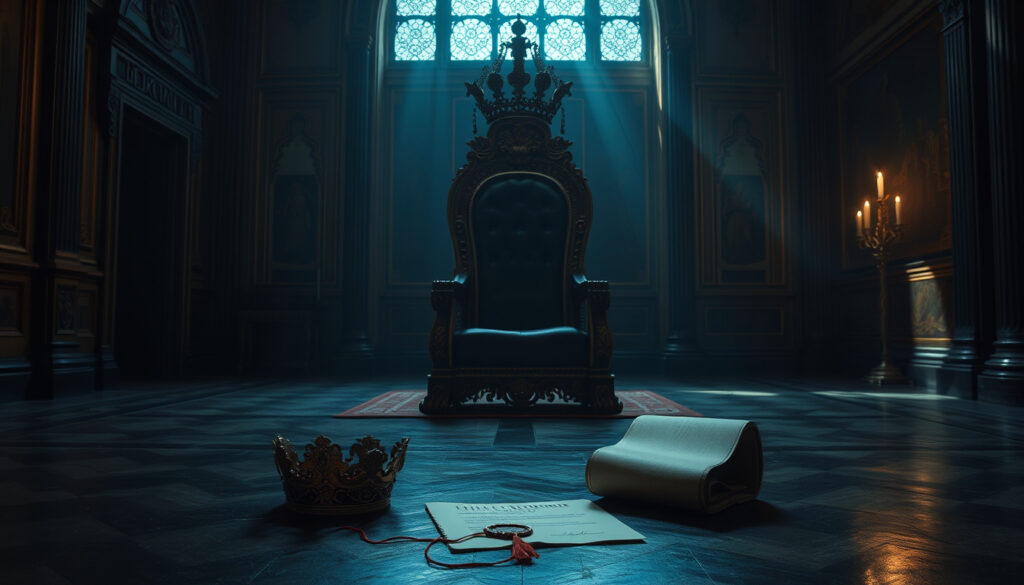
Louis XVI: Biography, Reign, Execution, and Last Words
If you picture a French king, you probably imagine someone decisive, regal, and firmly in control. Louis XVI, who inherited the throne just as France was sliding into bankruptcy and revolutionary fervor, was none of those things.
Born: August 23, 1754 ·
Reign: 1774–1792 ·
Executed: January 21, 1793 ·
Age at execution: 38 ·
Cause of death: Guillotine ·
Number of children: 4
Quick snapshot
- Executed by guillotine on January 21, 1793 (World History Encyclopedia)
- Convicted by the National Convention for high treason (Wikipedia)
- Last king of France to be executed (YouTube (historical channel))
- Whether he truly loved Marie Antoinette is debated among historians
- The exact nature of his sexual difficulties (phimosis vs psychological) is not definitively known
- The extent to which he personally supported counter-revolutionary plots is uncertain
- 1793: execution after a trial lasting from December 1792 (YouTube (historical analysis))
- 1791: Flight to Varennes sealed public distrust (YouTube (historical analysis))
- 1789: Estates-General convened, sparking the Revolution (YouTube (historical analysis))
- His son Louis Charles died in captivity in 1795
- Daughter Marie Thérèse survived and attempted to restore the monarchy
- The Bourbon Restoration eventually placed Louis XVIII on the throne in 1814
The key facts below provide a concise reference for the life and death of Louis XVI.
| Label | Value |
|---|---|
| Full name | Louis Auguste de France |
| Born | 23 August 1754 |
| Reign | 10 May 1774 – 21 September 1792 |
| Spouse | Marie Antoinette |
| Children | Marie Thérèse, Louis Joseph, Louis Charles, Sophie |
| Died | 21 January 1793 |
| Cause of death | Execution by guillotine |
| Last words | “Je meurs innocent de tous les crimes qu’on m’impute…” |
Why was Louis XVI condemned to death?
The National Convention, acting as both legislature and revolutionary court, charged Louis XVI with high treason — essentially for conspiring with foreign powers against the French Republic. The trial began in December 1792, and on January 15, 1793, the Convention voted him guilty (Alpha History (educational resource on the French Revolution)). A separate vote on punishment produced a narrow majority for death (Origins (The Ohio State University) (academic history journal)).
What was the trial of Louis XVI?
It was conducted by the National Convention rather than a traditional court, making it a foundational political event of the Revolution’s radical phase (EBSCO Research Starters (curated overview for students)). The trial included multiple recorded ballots on guilt, punishment, and reprieve (Wikipedia (compilation of voting records)). Robespierre famously argued that the king must die so that the nation could live (Parisology (history blog)).
How was he executed?
Louis XVI was guillotined at the Place de la Révolution (now Place de la Concorde) around 10:00 in the morning (World History Encyclopedia (detailed historical account)). The guillotine had become the revolution’s standard instrument of state execution (Alpha History). His death was publicly witnessed and widely reported across Europe.
What were the charges against him?
The principal charge was high treason: conspiring with foreign powers (especially Austria and Prussia) to overthrow the revolutionary government. The Convention declared that the king was subject to the same law as any citizen, rejecting the notion of royal immunity.
The same body that judged him — the National Convention — also acted as prosecutor, judge, and jury. This blurring of roles would define the revolutionary justice that followed.
Did Louis XVI love Marie Antoinette?
Historical accounts describe a loving but strained relationship. Louis XVI and Marie Antoinette married young — he was 15, she was 14 — and initial sexual difficulties due to Louis’s phimosis (a medical condition) created tension. Some historians argue the problem was partly psychological; the exact nature remains debated.
Why couldn’t Louis sleep with Marie Antoinette?
For the first seven years of marriage, rumours of non-consummation circulated because Louis suffered from phimosis, a tightening of the foreskin that made intercourse painful. A minor surgical intervention reportedly resolved the issue in 1777 (EBSCO Research Starters).
What syndrome did Marie Antoinette have?
“Marie Antoinette syndrome” refers to a sudden whitening of hair associated with severe trauma. Though often attributed to her, the condition is medically documented (canities subita) but the queen’s own gray hair was likely due to ordinary aging and stress — the myth persists in popular culture.
Why was Marie Antoinette executed?
She was tried by the Revolutionary Tribunal and convicted of high treason, as well as other charges, nine months after Louis XVI’s death. She was guillotined on October 16, 1793.
The personal struggles of the royal couple were weaponized by revolutionary propaganda to portray them as disloyal, indecent, and unsuited to rule.
The pattern: private difficulties became public symbols of royal inadequacy, fueling the case against the monarchy itself.
Why was Louis XVI a bad king?
Louis XVI inherited a bankrupt state from his grandfather Louis XV and failed to push through the tax reforms needed to stabilize France. His indecisiveness and reliance on conservative nobles blocked essential changes (Parisology).
What were Louis XVI’s failures?
- Inability to control the aristocracy and court spending.
- Unpopular foreign policy, including support for the American Revolution that deepened the debt.
- Resistance to convening the Estates-General until 1789, when it was too late.
Why did the French Revolution turn against him?
The Flight to Varennes in June 1791 shattered any remaining trust. Louis and his family attempted to escape France in disguise, leaving behind a manifesto denouncing the revolution. When captured, he was forced to accept the constitution, but the republican movement viewed him as a traitor.
What reforms did he attempt?
Louis supported the abolition of serfdom in 1779 and granted some civil rights to Protestants. He appointed reformist ministers like Turgot and Necker, but each attempt was blocked by the Parlements and the aristocracy.
The trade-off: Louis’s genuine personal kindness (he was known as “Louis the Good” early on) could not compensate for his lack of political will. He wanted to reform, but he could not decide which side to stand on.
What were Louis XVI’s last words?
Standing on the scaffold, Louis XVI addressed the crowd: “I die innocent of all the crimes of which I am accused; I forgive those who are the cause of my death; and I pray that the blood you are about to shed may never fall upon France.” His words were immediately drowned out by drumrolls ordered by the executioner (according to eyewitness accounts preserved in contemporary records).
Did Louis XVI say anything before his execution?
Yes, he delivered a short speech of about three minutes. The full French text, recorded by the journalist Pierre-Louis Roederer, includes the phrases “Je meurs innocent de tous les crimes qu’on m’impute” and “Je pardonne à ceux qui se sont rendus coupables de ma mort.”
What is the exact quote of his last words?
The most widely accepted transcription is: “Je meurs innocent de tous les crimes qu’on m’impute. Je pardonne aux auteurs de ma mort. Je prie Dieu que le sang que vous allez répandre ne retombe jamais sur la France.”
How are his last words remembered?
They have become a symbol of his personal piety and the tragedy of a well-meaning king caught in a revolution he could neither embrace nor suppress.
Why is Louis XVI so famous?
Louis XVI is famous primarily because his reign ended with the abolition of the French monarchy and his own execution. He represents the death of the ancien régime and the triumph of popular sovereignty.
What is Louis XVI’s legacy?
He is remembered as both a tragic figure — a man who wanted to be a good king but lacked the decisiveness — and as a symbol of the monarchy’s irrelevance. His execution cleared the way for the First French Republic.
Why is he remembered as a tragic figure?
Many historians note his personal kindness, his devotion to his family, and his interest in practical skills (he enjoyed locksmithing). The gap between his personal virtues and his political failures makes him a subject of enduring fascination.
How does his reign connect to the end of the monarchy?
Directly: his trial and execution were the decisive acts that destroyed the monarchical principle in France. His death led to the Reign of Terror, and later, after Napoleon’s fall, a short-lived restoration that never regained the absolutist power.
The implication: Louis XVI’s fame rests on his failure — and that failure reshaped the political landscape of Europe for generations.
Timeline: Key events of Louis XVI’s reign
- 23 August 1754 – Birth at Versailles
- 10 May 1774 – Becomes King upon death of Louis XV
- 5 May 1789 – Convening of the Estates-General
- 20 June 1791 – Flight to Varennes
- 10 August 1792 – Storming of the Tuileries; monarchy suspended
- 21 September 1792 – Abolition of the monarchy; Louis imprisoned
- December 1792 – January 1793 – Trial before the National Convention
- 21 January 1793 – Execution by guillotine
Timeline signal: the decisive break came in 1791 with the failed escape — after that, the revolution no longer trusted its king.
What’s confirmed and what’s unclear
Confirmed facts
- Louis XVI was executed on January 21, 1793.
- His last words were recorded as a declaration of innocence and forgiveness.
- He was convicted by the National Convention for conspiracy with foreign powers.
- The execution took place at the Place de la Révolution in Paris.
What’s unclear
- Whether he truly loved Marie Antoinette is debated among historians.
- The exact nature of his sexual difficulties (phimosis vs psychological) is not definitively known.
- The extent to which he personally supported counter-revolutionary plots is uncertain.
Voices from history
“I die innocent of all the crimes of which I am accused; I forgive those who caused my death.”
– Louis XVI, last words from the scaffold, 21 January 1793
“He is not a king; he is a good father, a good husband, a good master — but he is not a king.”
– Marie Antoinette, describing Louis XVI in a letter to her sister-in-law
“Louis must die so that the nation may live.”
– Maximilien Robespierre, speech to the National Convention, December 1792
The last king of France
Louis XVI occupied the throne at the worst possible moment, but his personal indecision turned a financial crisis into a revolution that consumed him. For anyone studying the French Revolution, the lesson is clear: in times of upheaval, good intentions without decisive action are not merely useless — they can be fatal. For modern readers, the story of Louis XVI is a warning that leadership demands more than niceness; it demands the courage to choose and the clarity to act.
alphahistory.com, en.wikipedia.org, facebook.com, crozieronstuff.com, kraftlinje.org
Frequently asked questions
How many children did Louis XVI have?
Four: Marie Thérèse, Louis Joseph (died at age 7), Louis Charles, and Sophie (died in infancy).
What was the Flight to Varennes?
An attempt by Louis XVI and his family to escape revolutionary France in June 1791. They were captured near the town of Varennes and returned to Paris, which destroyed public trust in the king.
What reforms did Louis XVI attempt?
He abolished serfdom in 1779, granted civil rights to Protestants, and tried to impose tax equality through ministers like Turgot and Necker — but resistance from the aristocracy blocked them.
What happened to Louis XVI’s body after execution?
His body was buried in an unmarked grave in the Madeleine cemetery (now the site of the Square Louis XVI). During the Bourbon Restoration, his remains were exhumed and reburied in the Basilica of Saint-Denis.
Did Louis XVI try to escape France?
Yes, the Flight to Varennes was a failed escape attempt. He left behind a manifesto criticizing the revolution and intended to join royalist forces in Montmédy.
What was Louis XVI’s relationship with the Estates-General?
He reluctantly convened the Estates-General in 1789 after years of refusing. The deadlock over voting procedures (by order vs by head) led the Third Estate to form the National Assembly, triggering the revolution.
Why was Louis XVI called ‘the Last’?
He is often called “the last king of France” because he was the last Bourbon king to rule before the monarchy was abolished. (Technically, Louis XVIII reigned after the Restoration, but Louis XVI is the last to die on the throne.)
Related reading
More related posts
 Vicki Fowler: EastEnders Character Guide & 2025 Return
 Sarah Pidgeon: Biography, Movies & Who She Looks Like
 How Much Magnesium Per Day – RDA by Age and Gender
 What Is Metronidazole Used For – Uses, Dosage, Side Effects
 Hayley Atwell: The Facts on Tom Cruise Rumors and Pregnancy
 Danny Dyer Guide: Wife, New Series, and Net Worth
 Tiger Woods 2025: Net Worth, Relationship Status, and Career
 Westlife Members: Original, Current Lineup & Who Left